
The Future of Luxury Transportation Design Is Built on Experience
Luxury in transportation is often misunderstood. It’s still too easily associated with cost, exclusivity, or visual excess, with larger cabins, and more of everything. But that definition is quickly becoming outdated.
According to McKinsey & Company, more than 70% of luxury consumers now prioritize experience over ownership, with travel and hospitality leading that shift. In transportation, this is becoming increasingly visible.
The future of transportation design is not about how much something costs, but rather how it feels to move through it, how it adapts, and especially how it holds space for the travel experience.
Across aviation, marine, and infrastructure, the shift is clear: luxury moved away from accumulation and is now defined by precision, restraint, and intention.
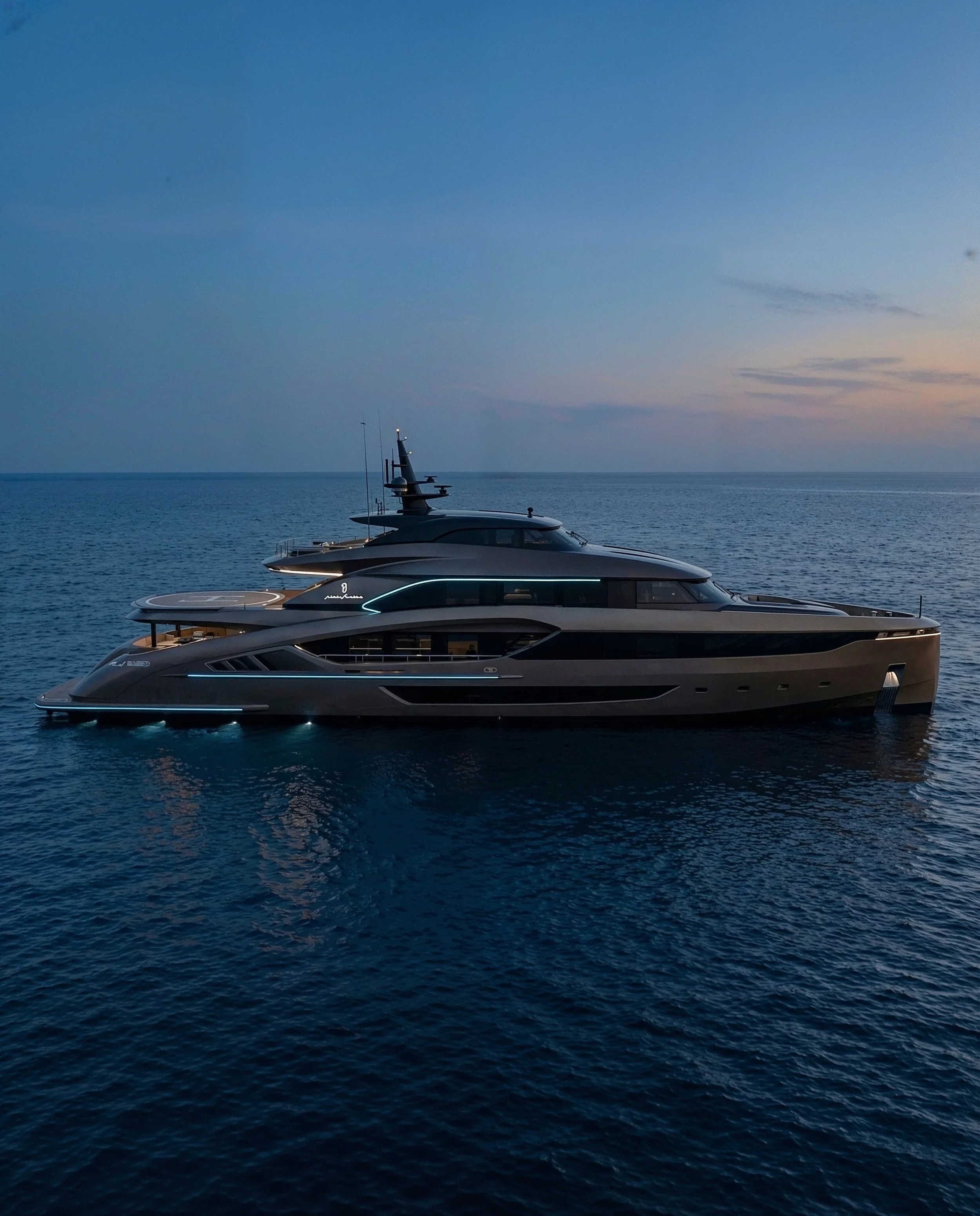
Rethinking Luxury: From Ownership to Experience
Luxury travel used to signal status. Today, it signals something else entirely: time, calm, privacy, and clarity.
Whether someone is stepping into a private jet, boarding a yacht, or arriving at a terminal, what they value is not excess. It’s continuity.
A seamless transition from ground to air
A space that slows them down rather than overwhelms them
An environment that feels considered at every scale
This is why experience-driven design is becoming central to luxury transportation.
The Future of Arrival: Designing the First Moment
One of the most overlooked aspects of luxury travel is arrival. Airports, even private ones, have historically been designed for efficiency, set up like functional boxes next to runways.
But the importance of arrival is not just conceptual. Data from the International Air Transport Association shows that passenger satisfaction is most strongly influenced by the first and last touchpoints of a journey, including terminal experience and boarding flow. And even in private aviation, where efficiency is expected, the emotional quality of arrival remains a defining factor.
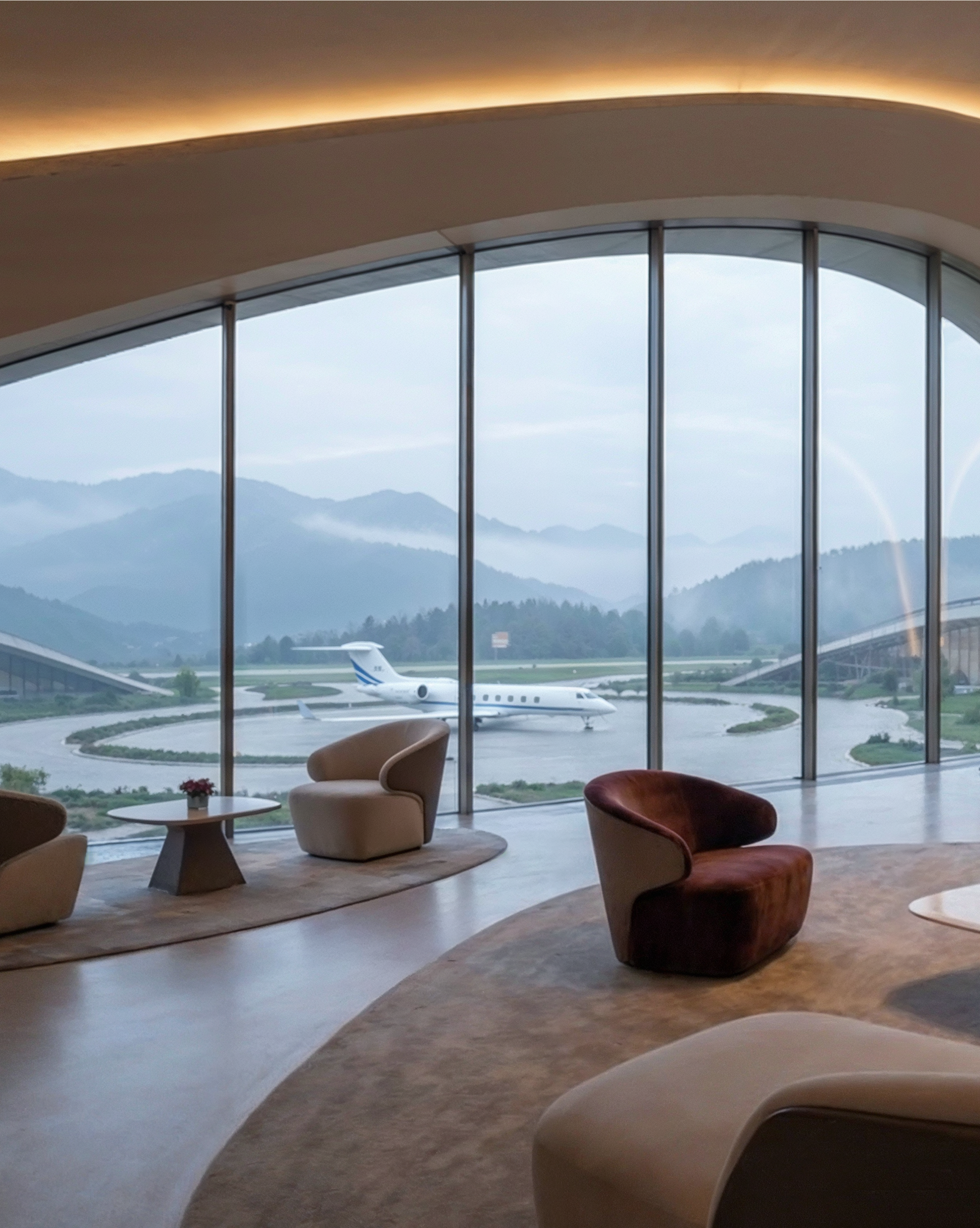
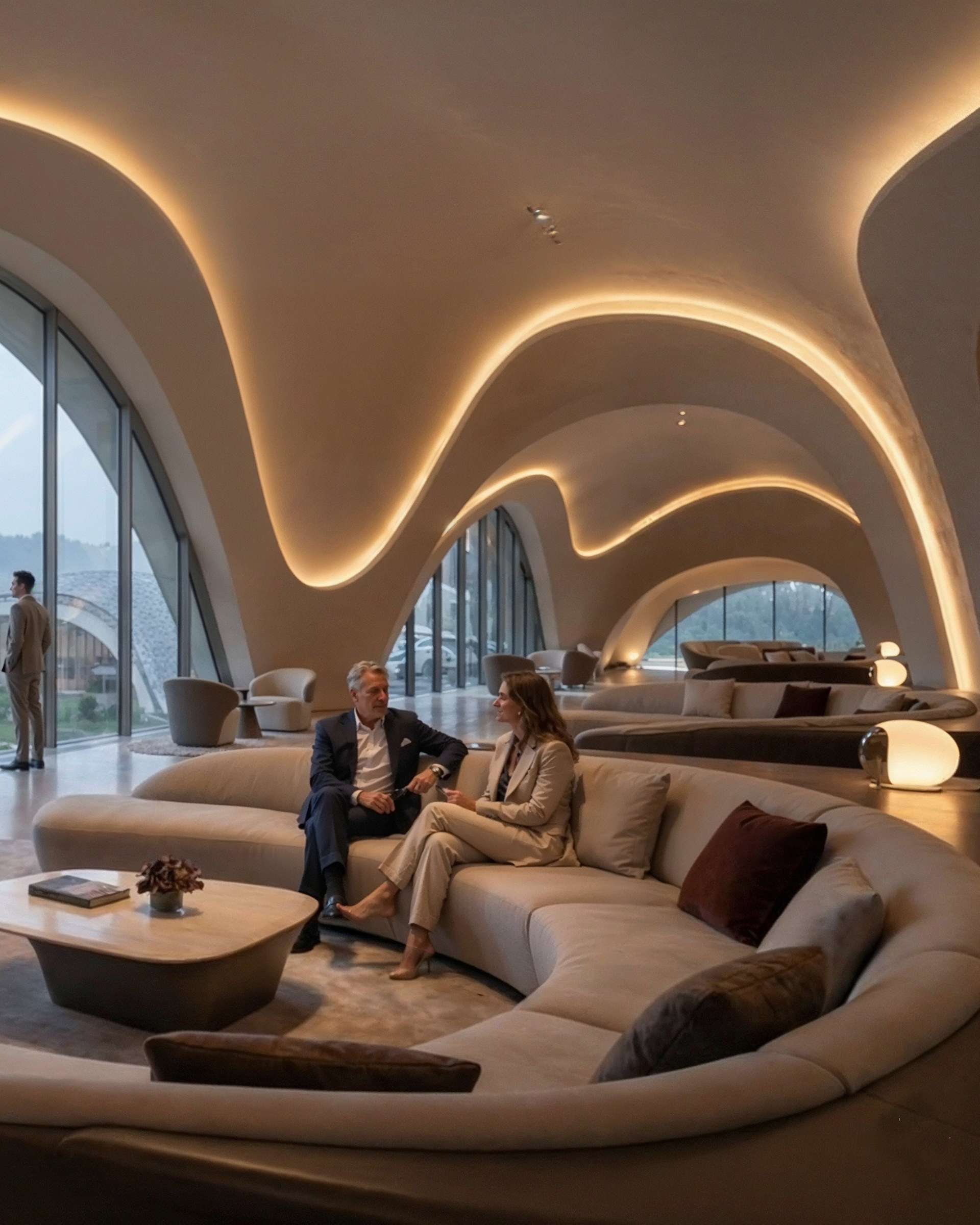
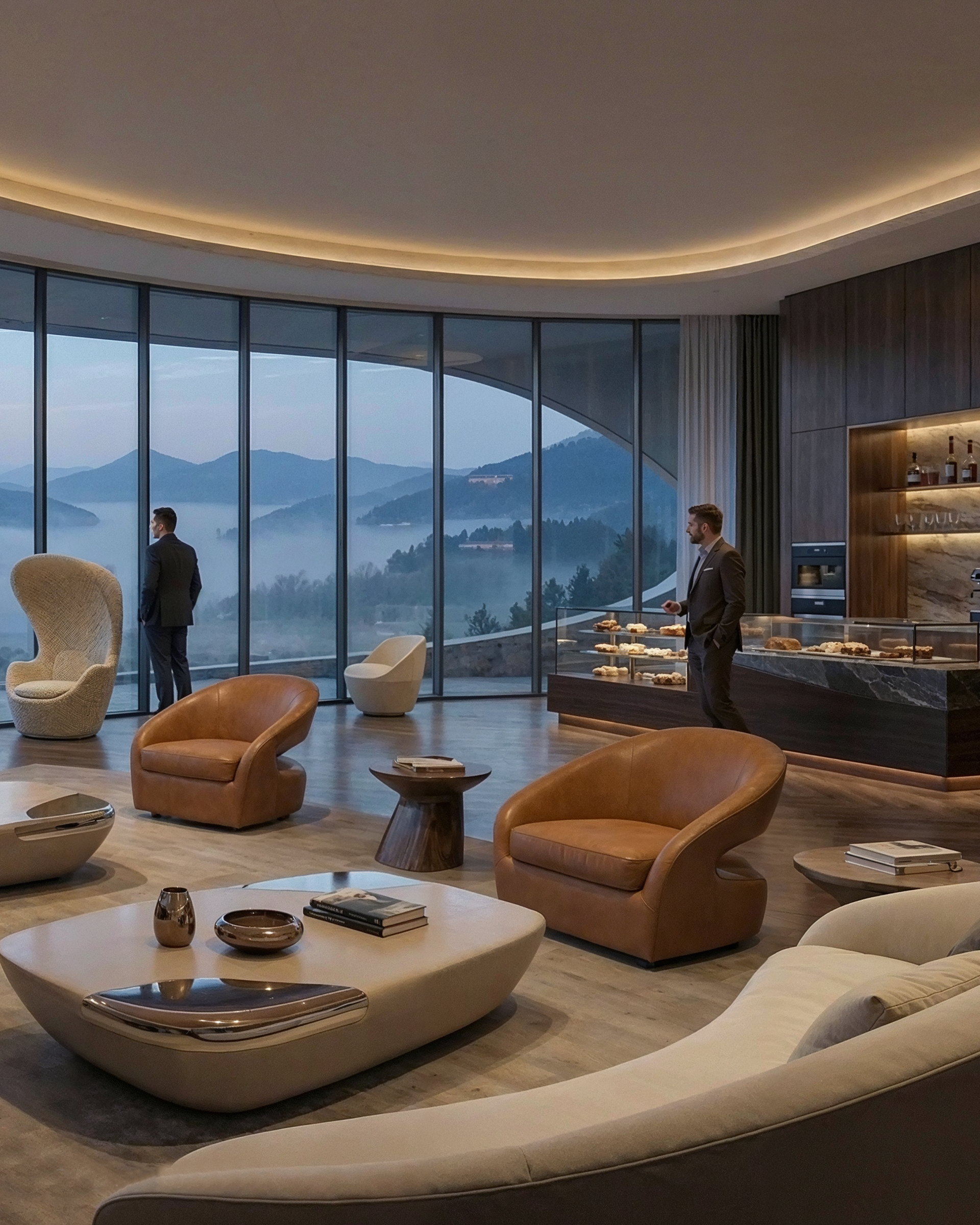
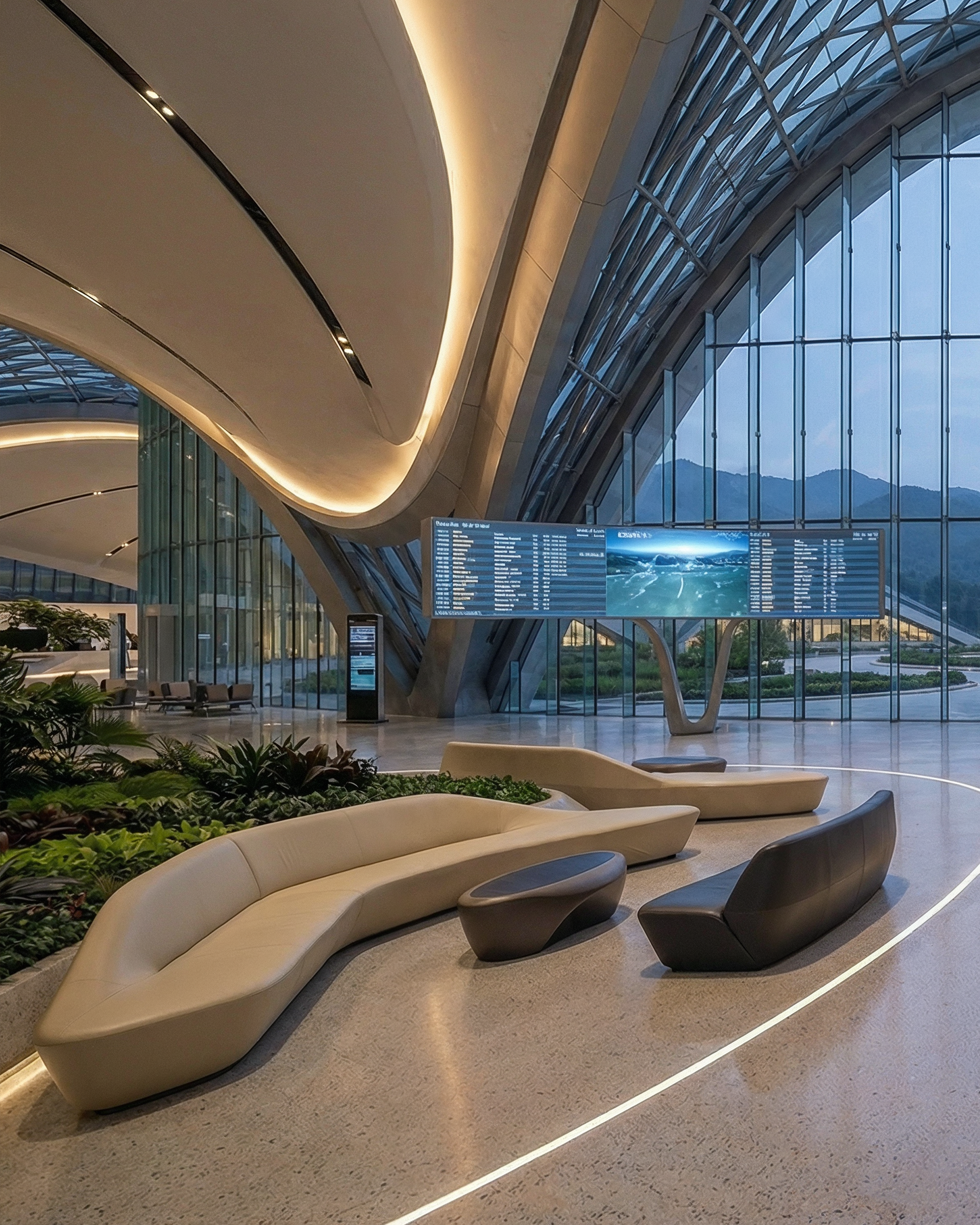
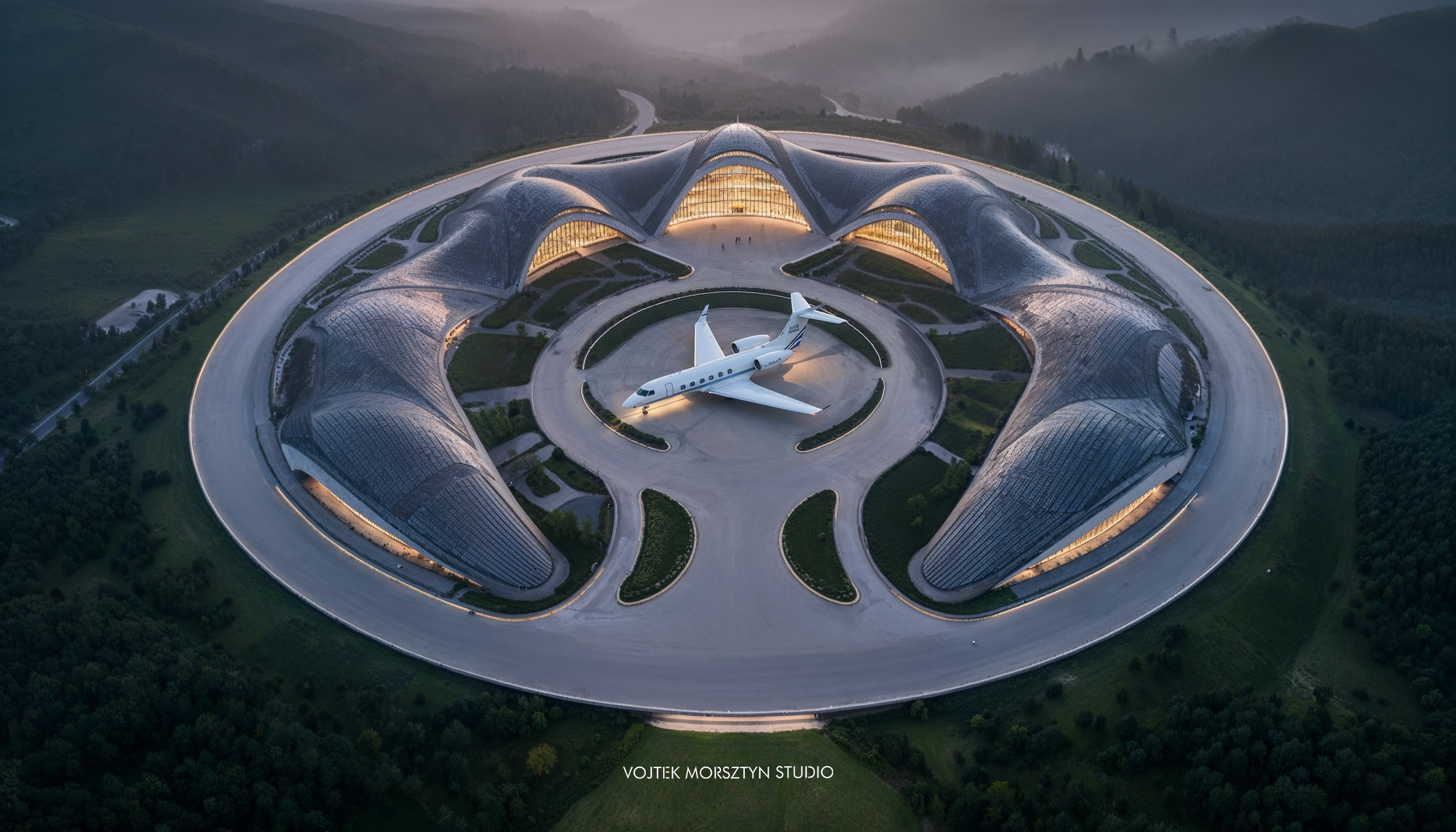
With The Future of Arrival: Redefining the FBO project, we explored what happens when you, instead of designing a terminal around operations, design it around passenger experience.
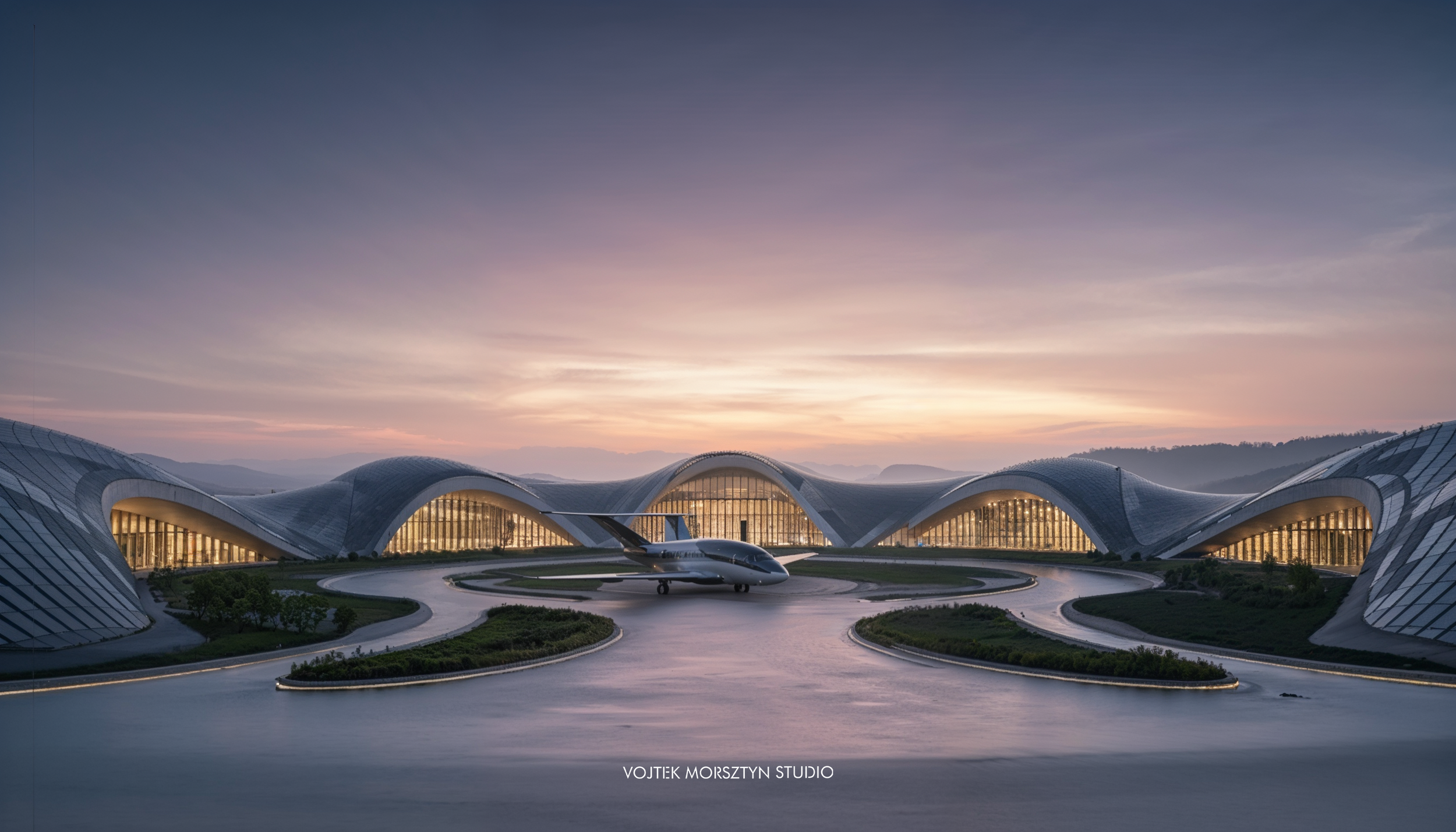
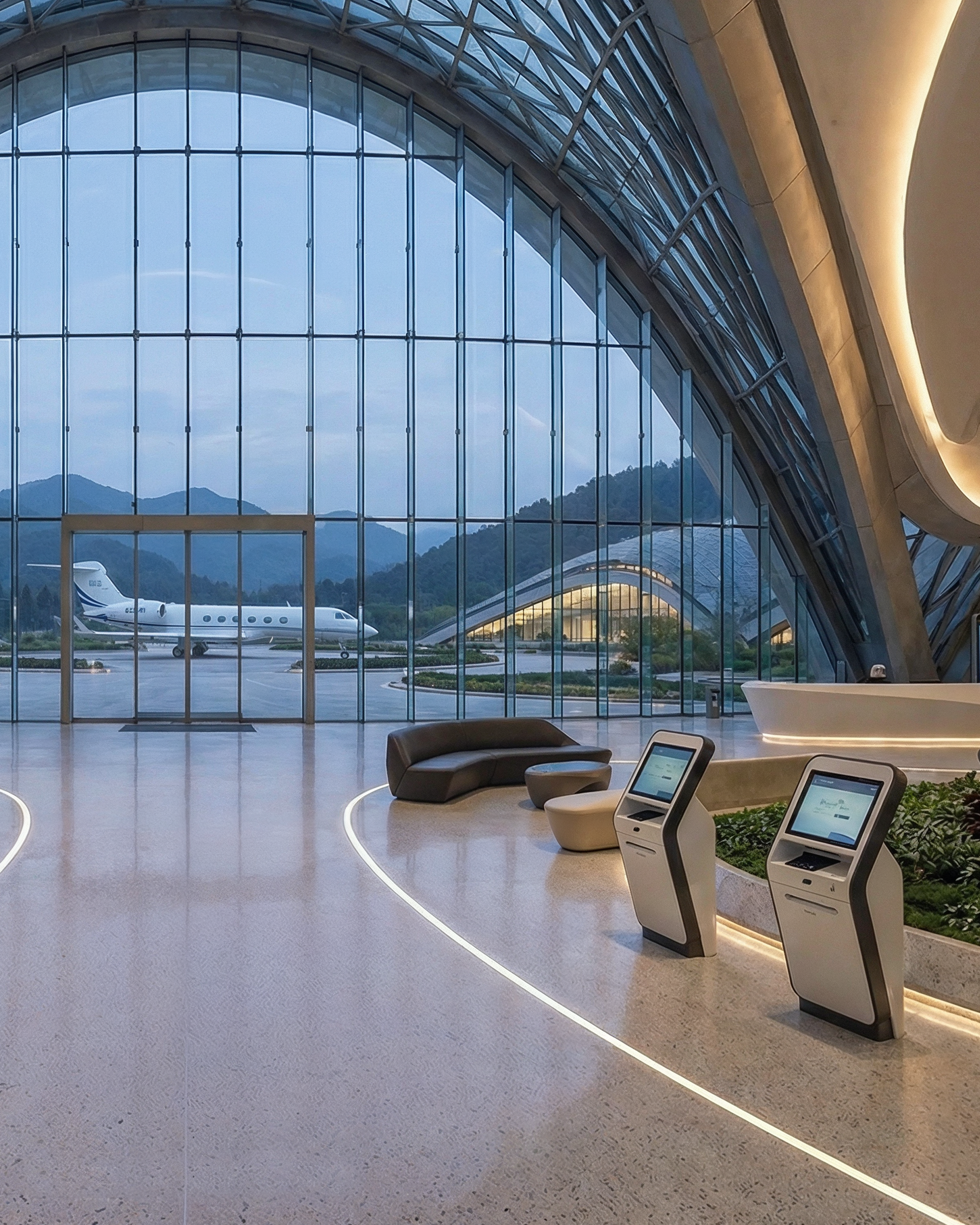
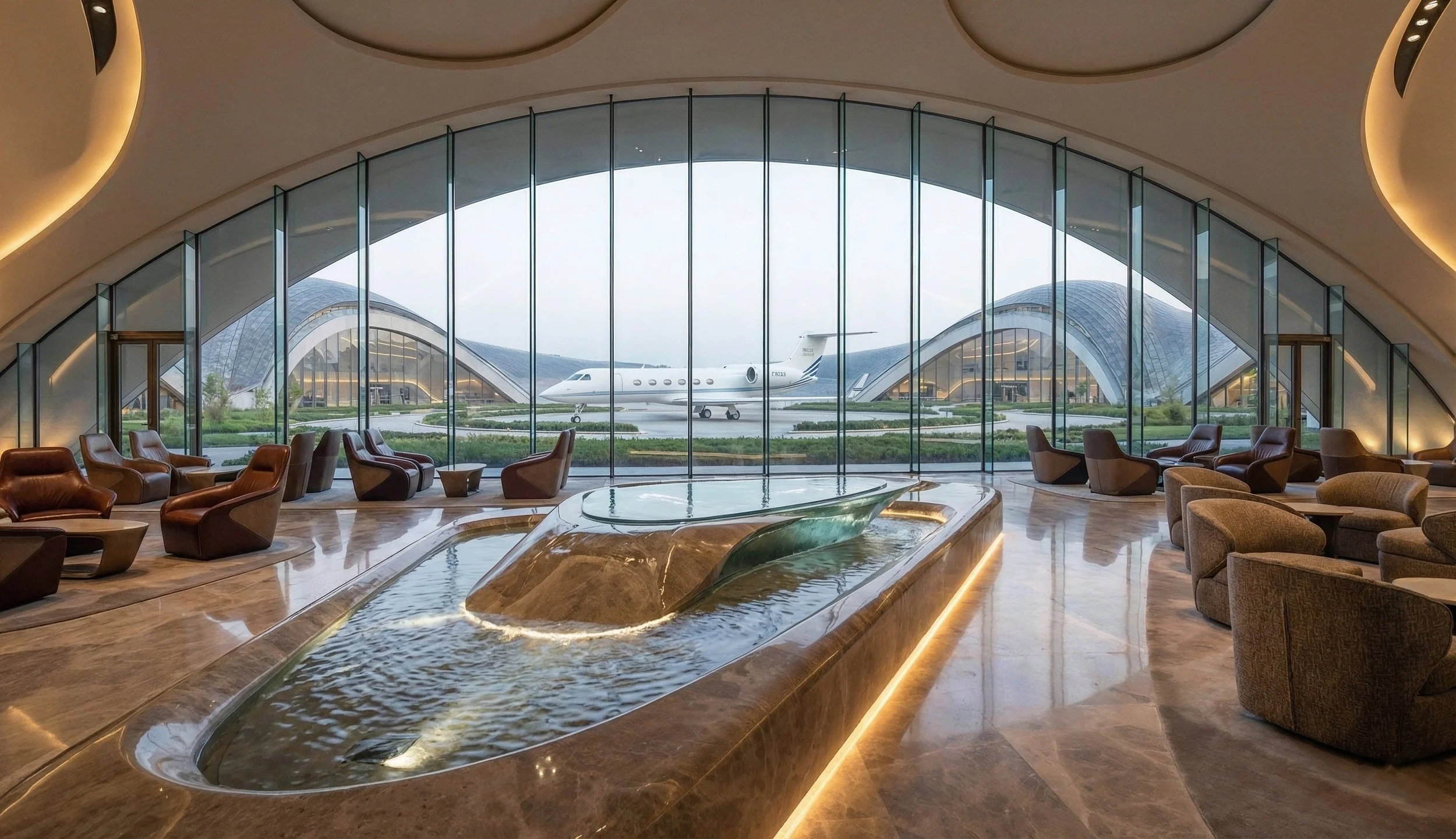

The Oculus Concept
At the center of the project is a circular infrastructure that wraps around the aircraft.
The aircraft no longer sits outside and instead becomes the focal point
Arrival becomes a controlled, almost theatrical moment
Movement is organized around a central experience rather than linear processing
This changes everything. The guest doesn’t move through a sequence of disconnected steps. They enter a space where architecture, machine, and movement are aligned from the beginning.
At the same time, the design integrates efficiency without making it visible.
360-degree access enables simultaneous servicing
Turnaround time is reduced without compromising experience
The upper level introduces eVTOL integration, connecting long-range and urban mobility
This is where luxury transportation design is heading: environments that are both operationally intelligent and experientially refined.
Movement as a Design Language
Across our work, one idea repeats itself: design should not just contain movement and instead be shaped by it.
In projects like Ring of the Sea, the marina is not treated as a static object but as an extension of the coastline. The architecture follows the curve of the water, creating a continuous relationship between land, city, and sea. This kind of approach reflects a broader shift in luxury design. Instead of imposing form, we are learning to work with natural systems:
Coastlines
Light patterns
Water movement
Human circulation
Luxury becomes less about control and more about alignment.
The Interior: Where Luxury Becomes Personal
If arrival defines the first impression, the interior defines everything that follows.
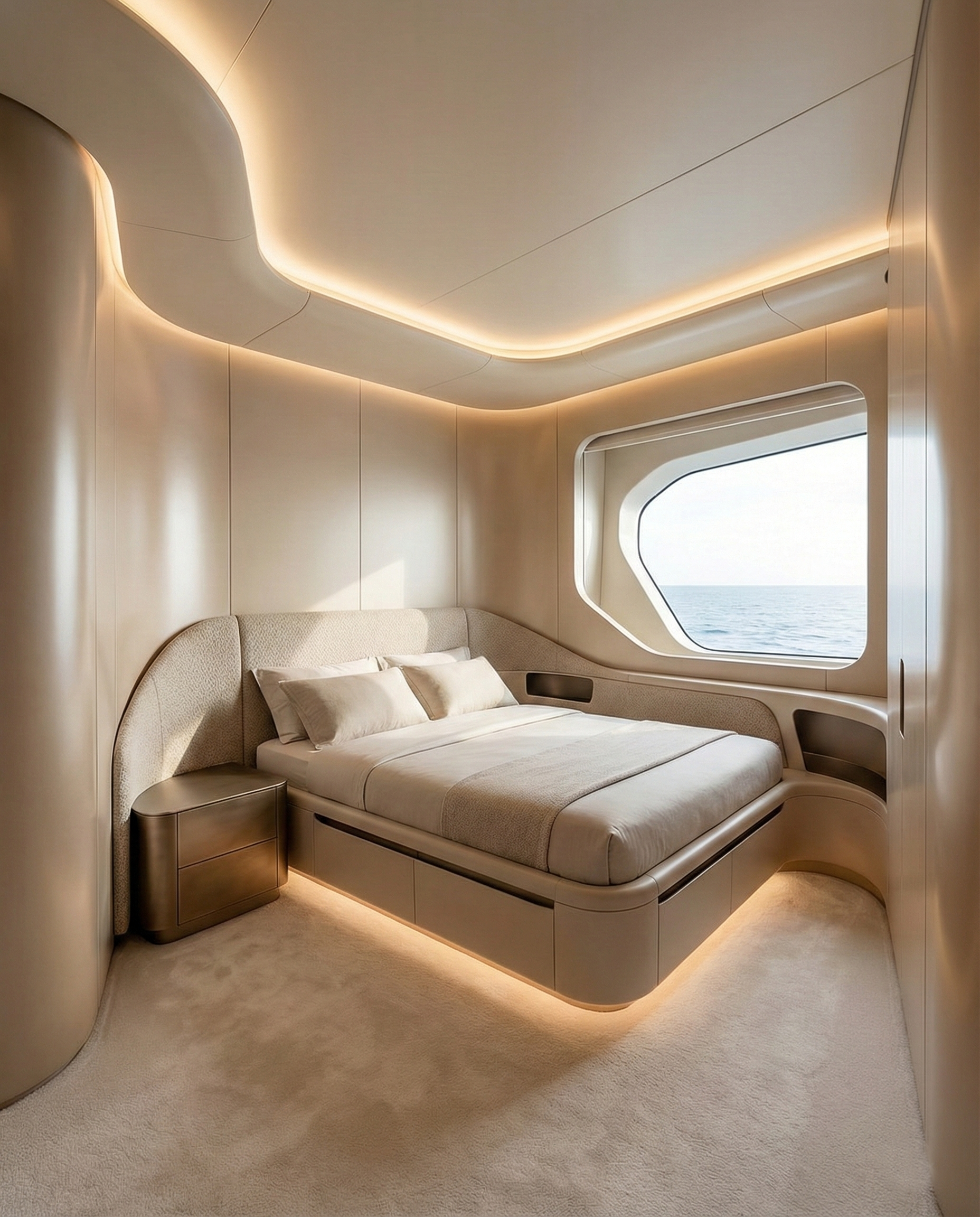
In aviation and marine design, interiors are becoming extensions of lifestyle. In fact, research from Honeywell Aerospace indicates that cabin comfort and interior design are among the top three factors influencing private aviation preference, alongside safety and reliability. This reinforces the idea that interiors are central to the overall experience.
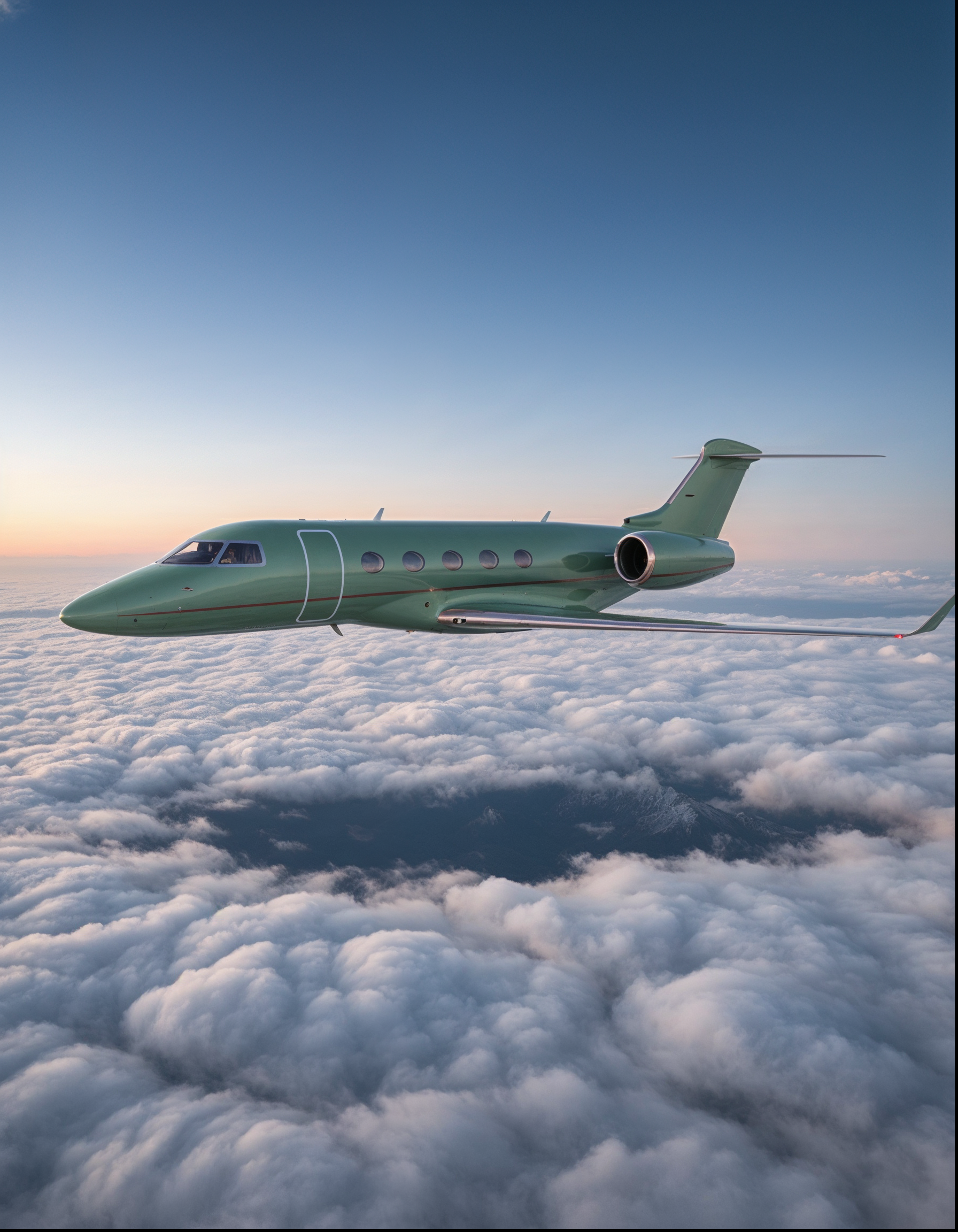
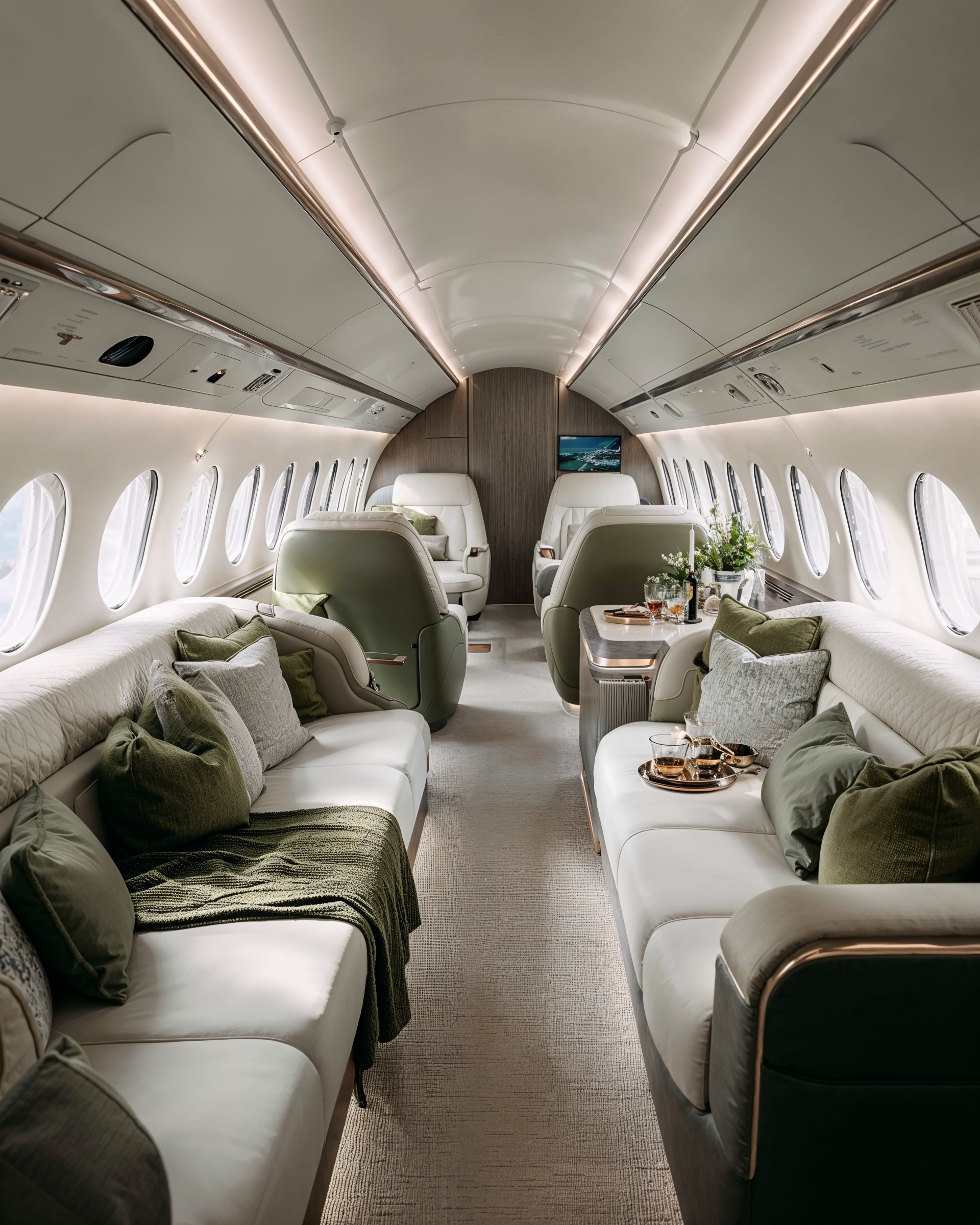
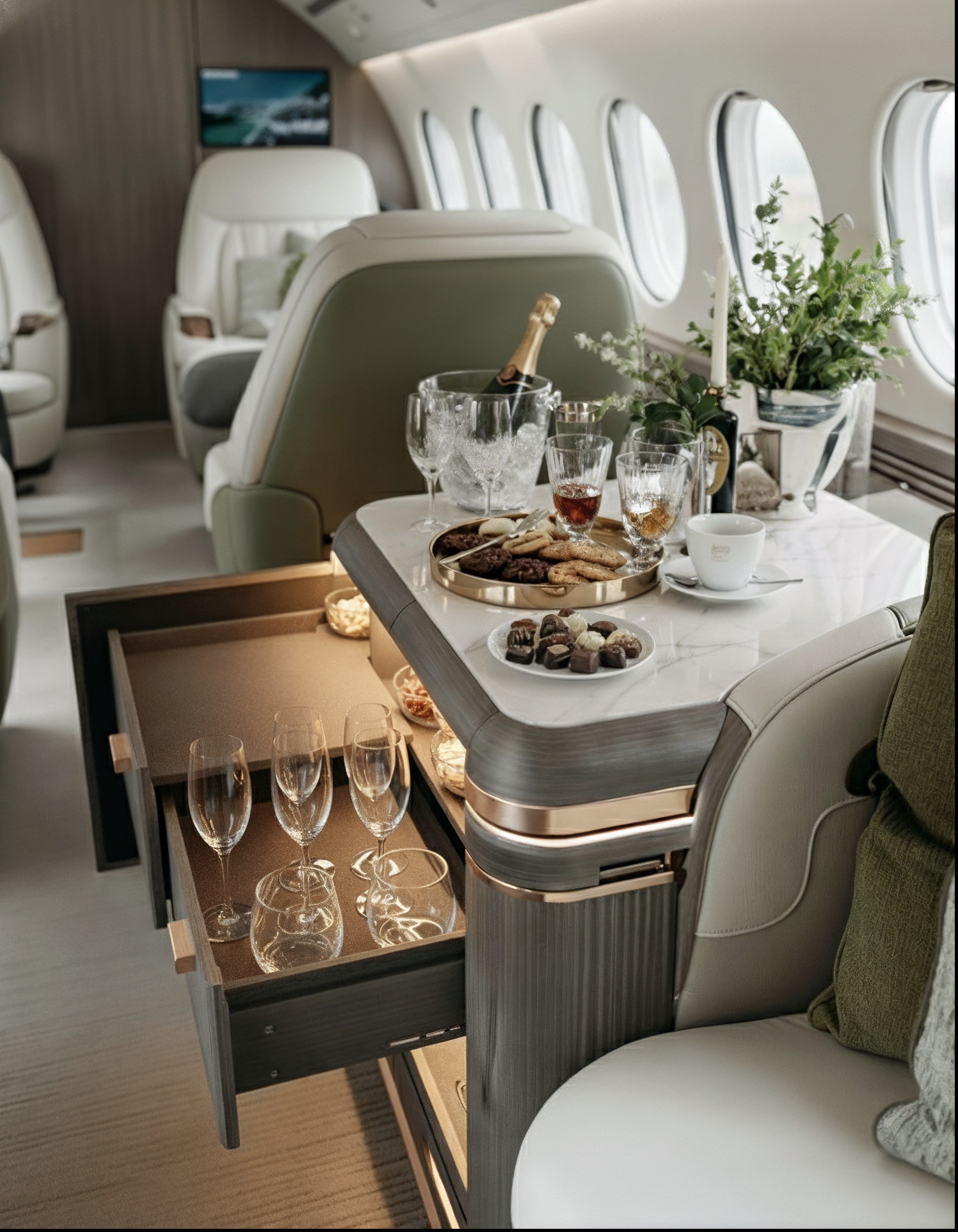
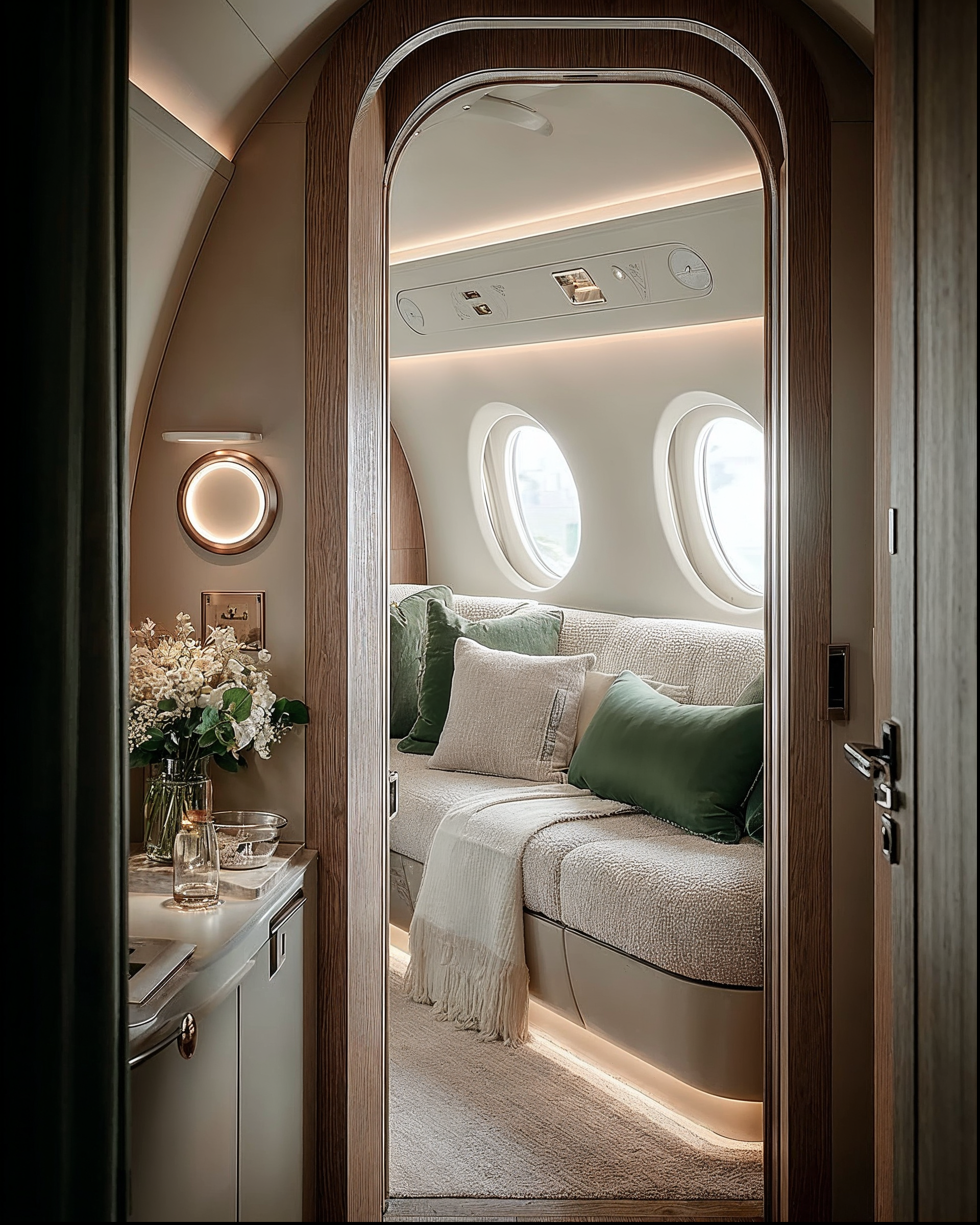
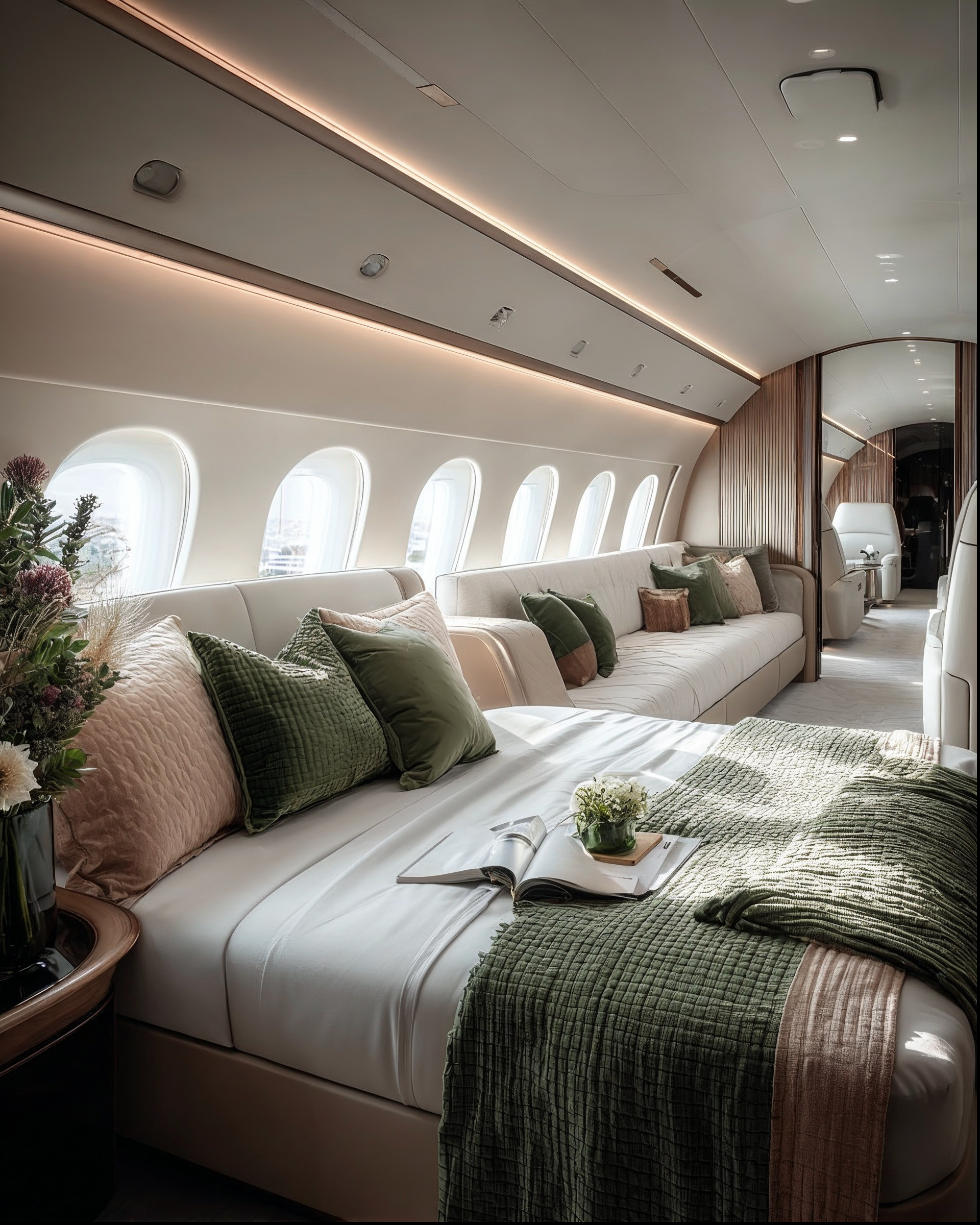
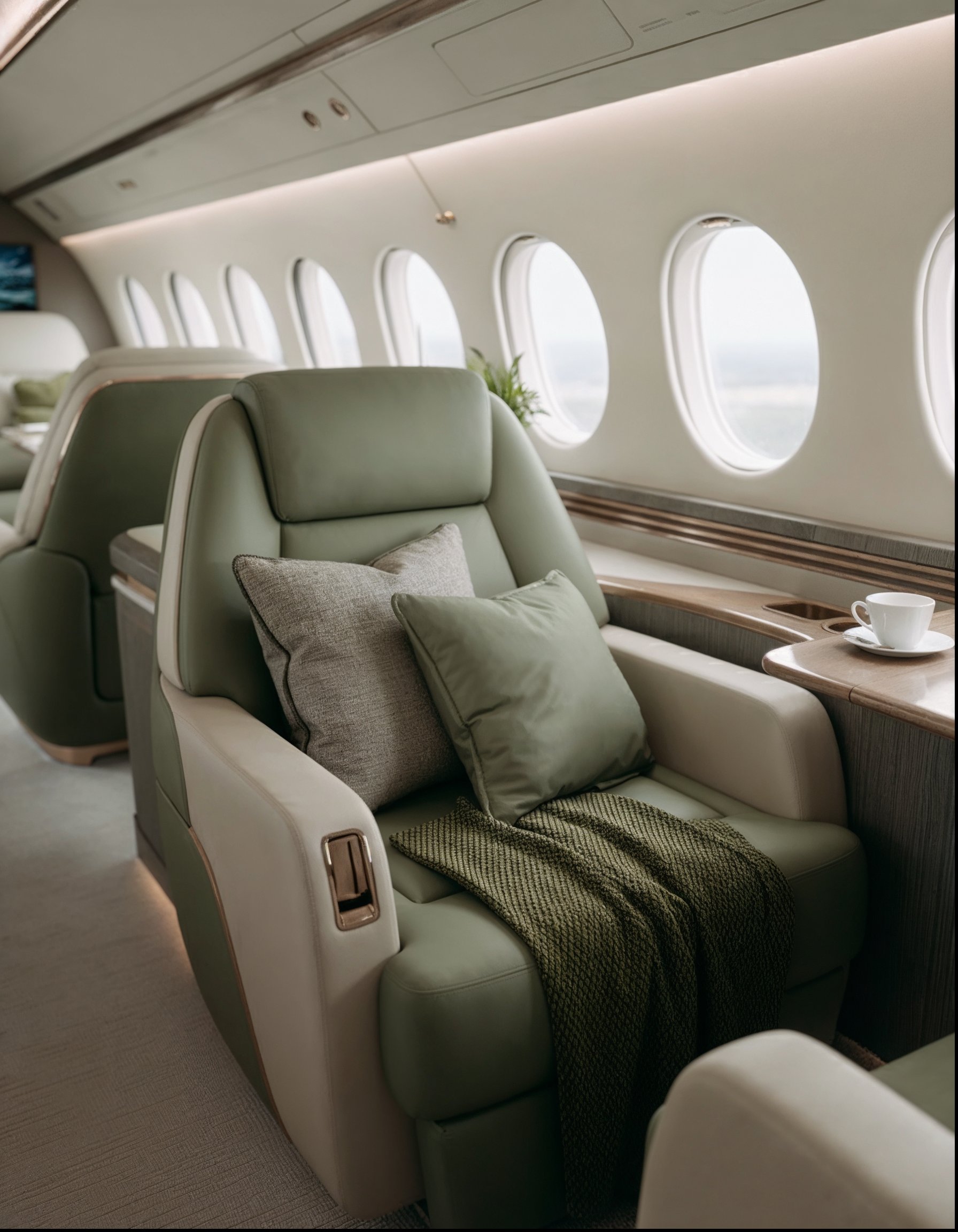
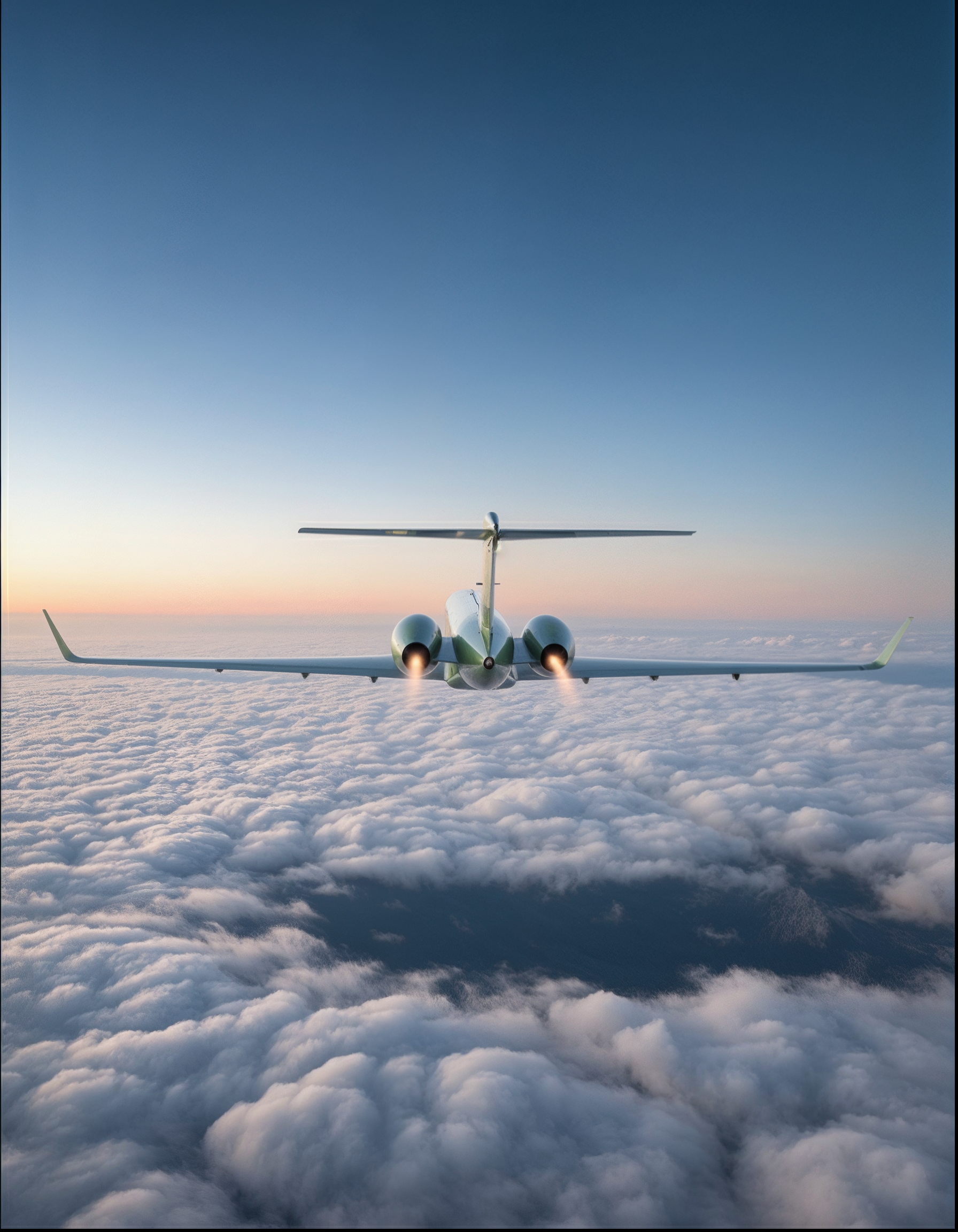
In Emerald Falcon, the jet interior is designed around calm rather than spectacle.
Soft color palettes
Controlled natural light
Materials that feel warm, not performative
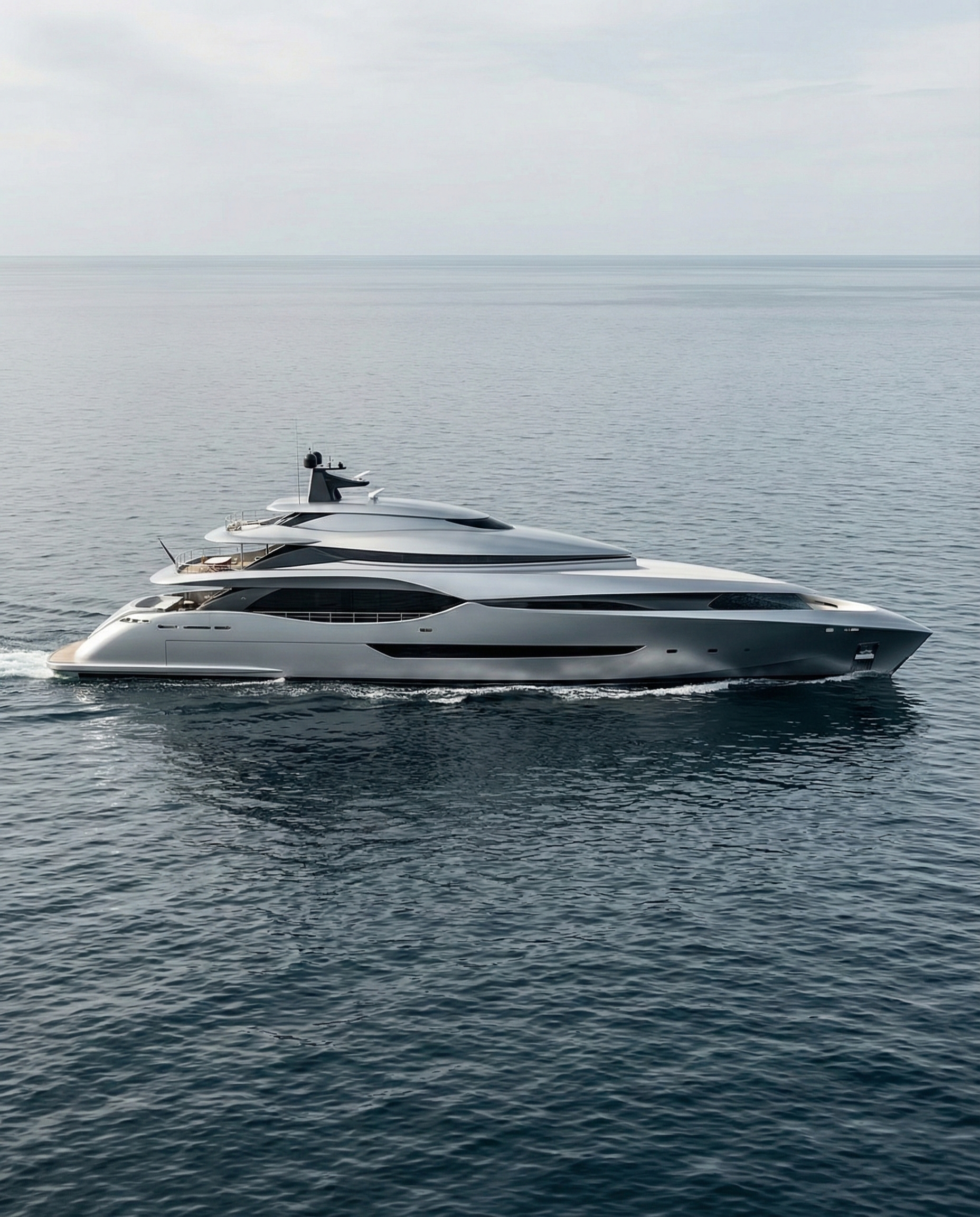
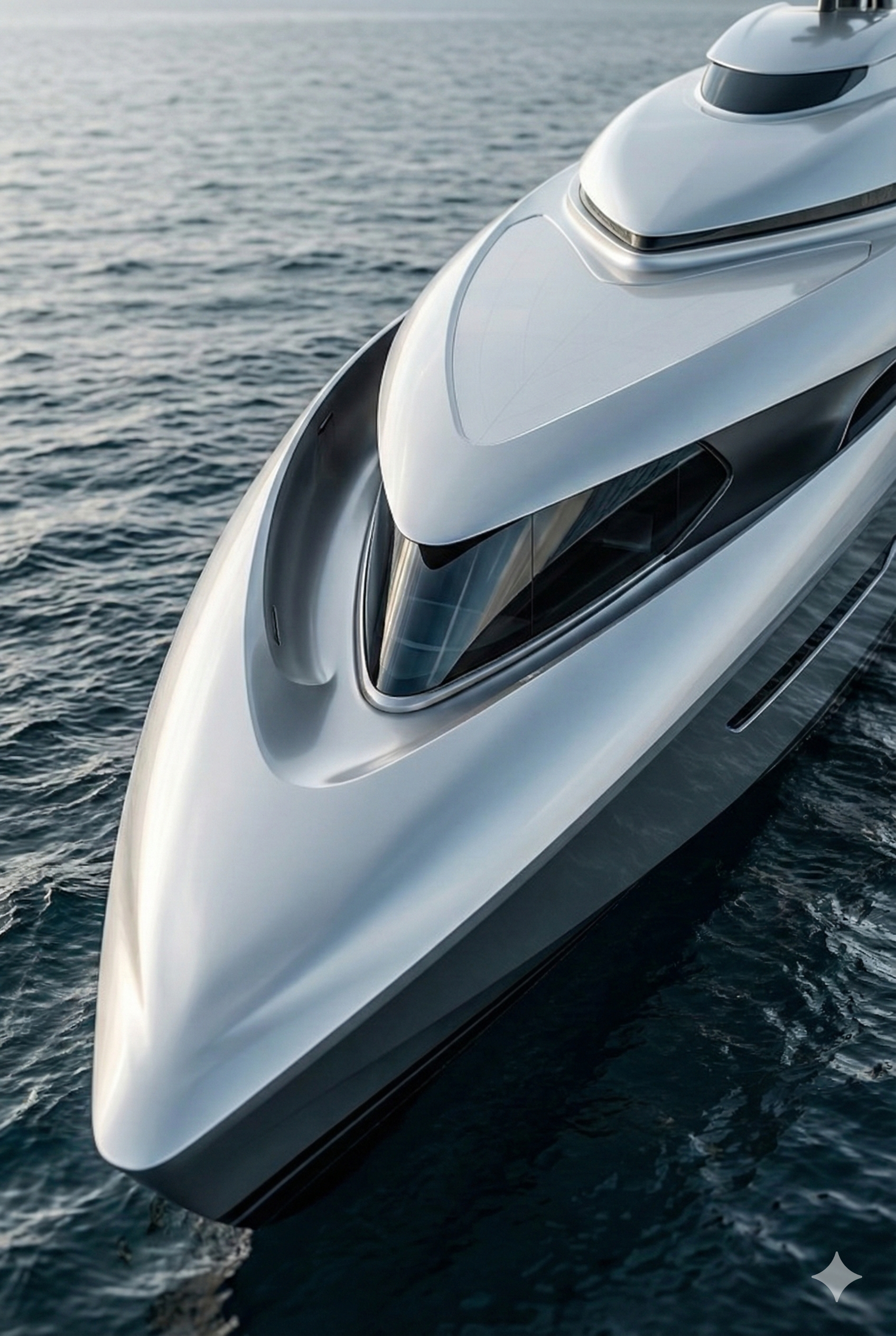
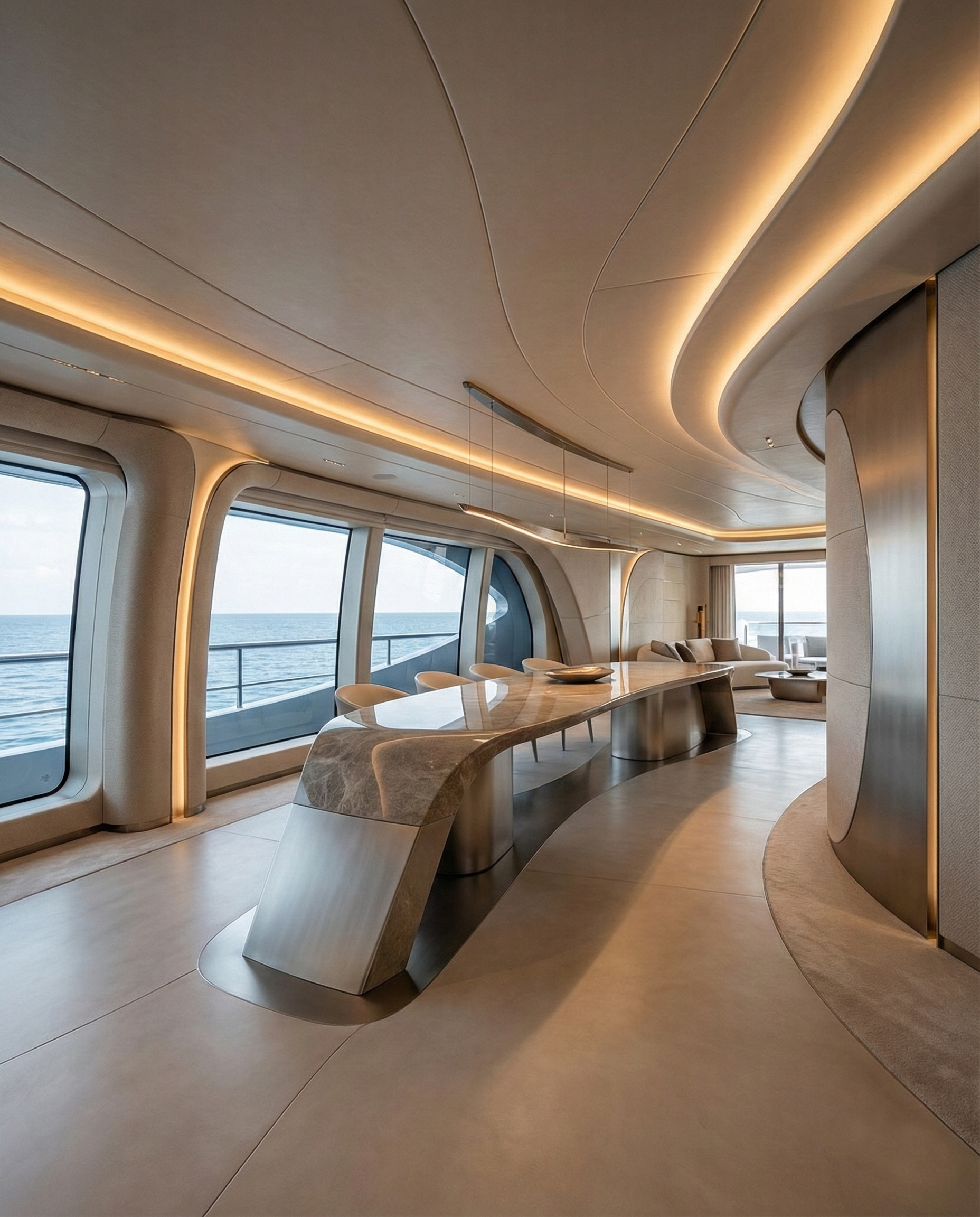
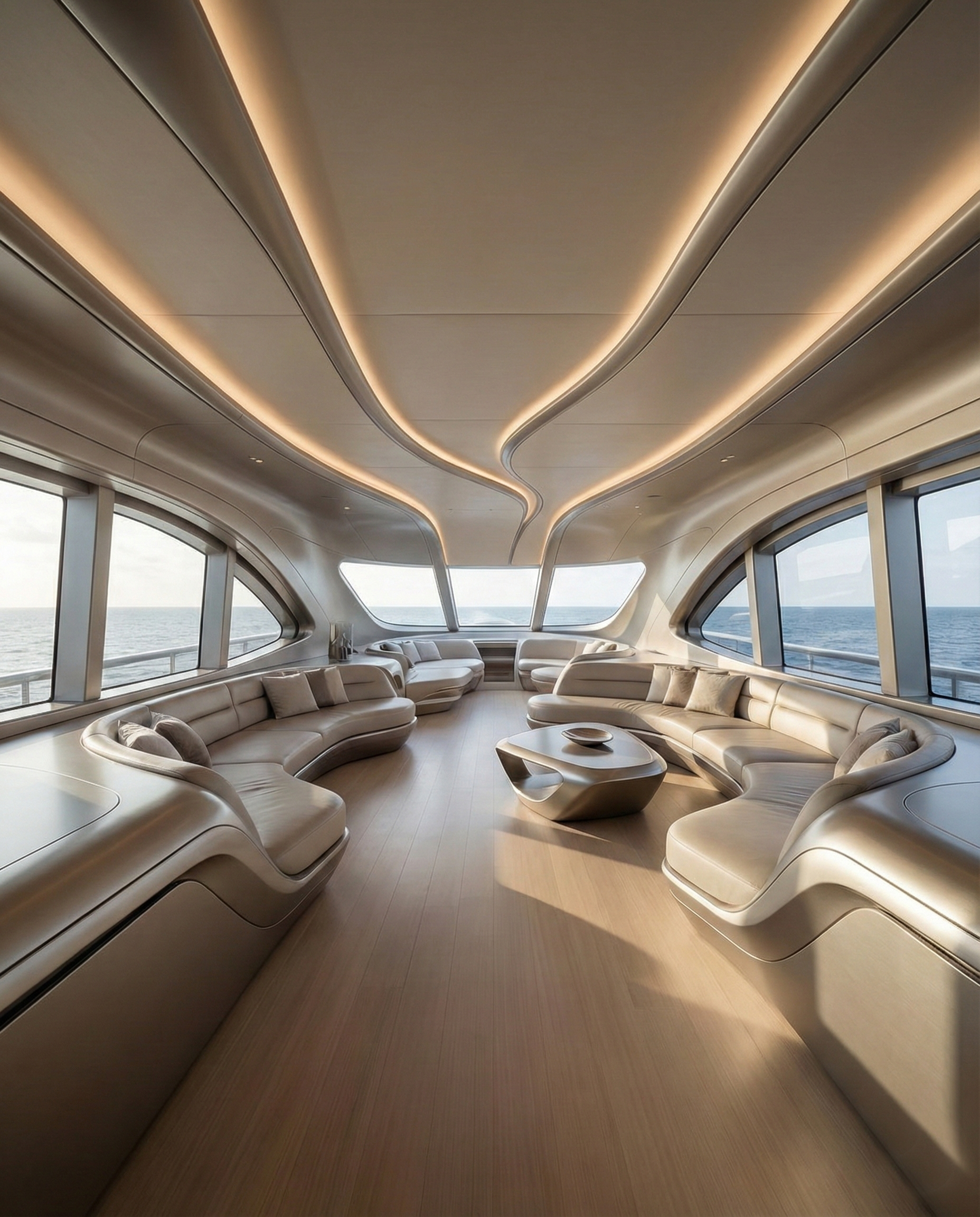
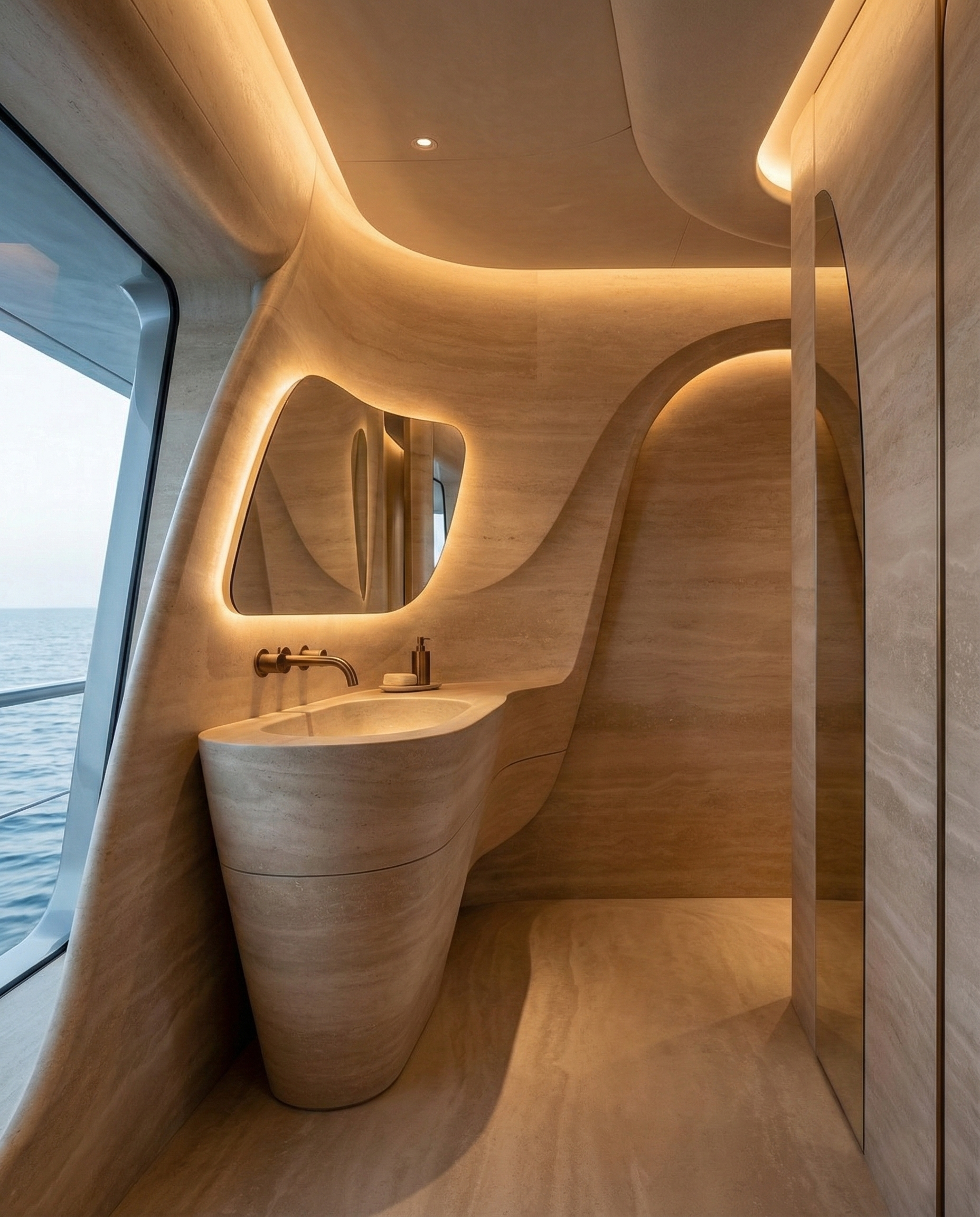
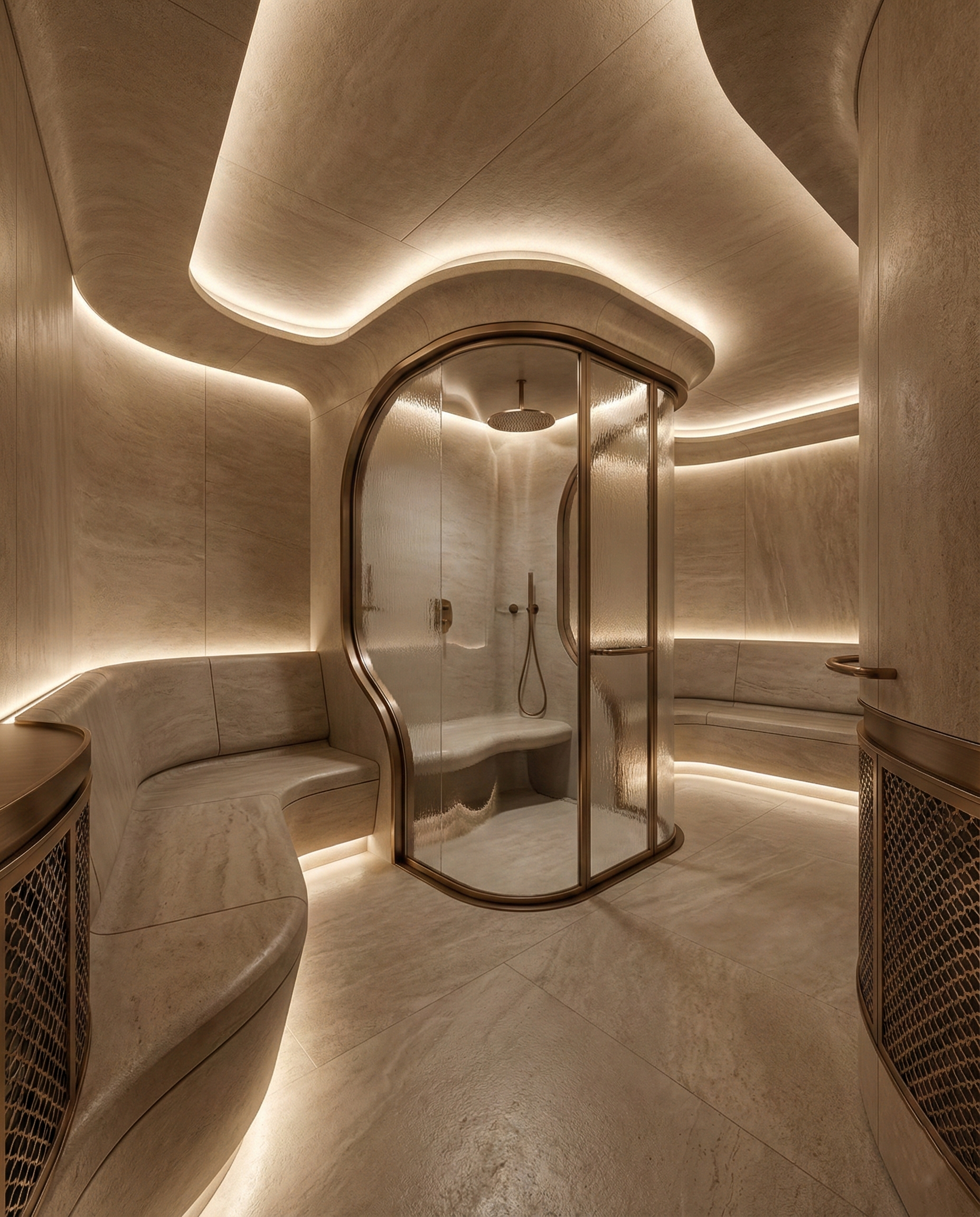
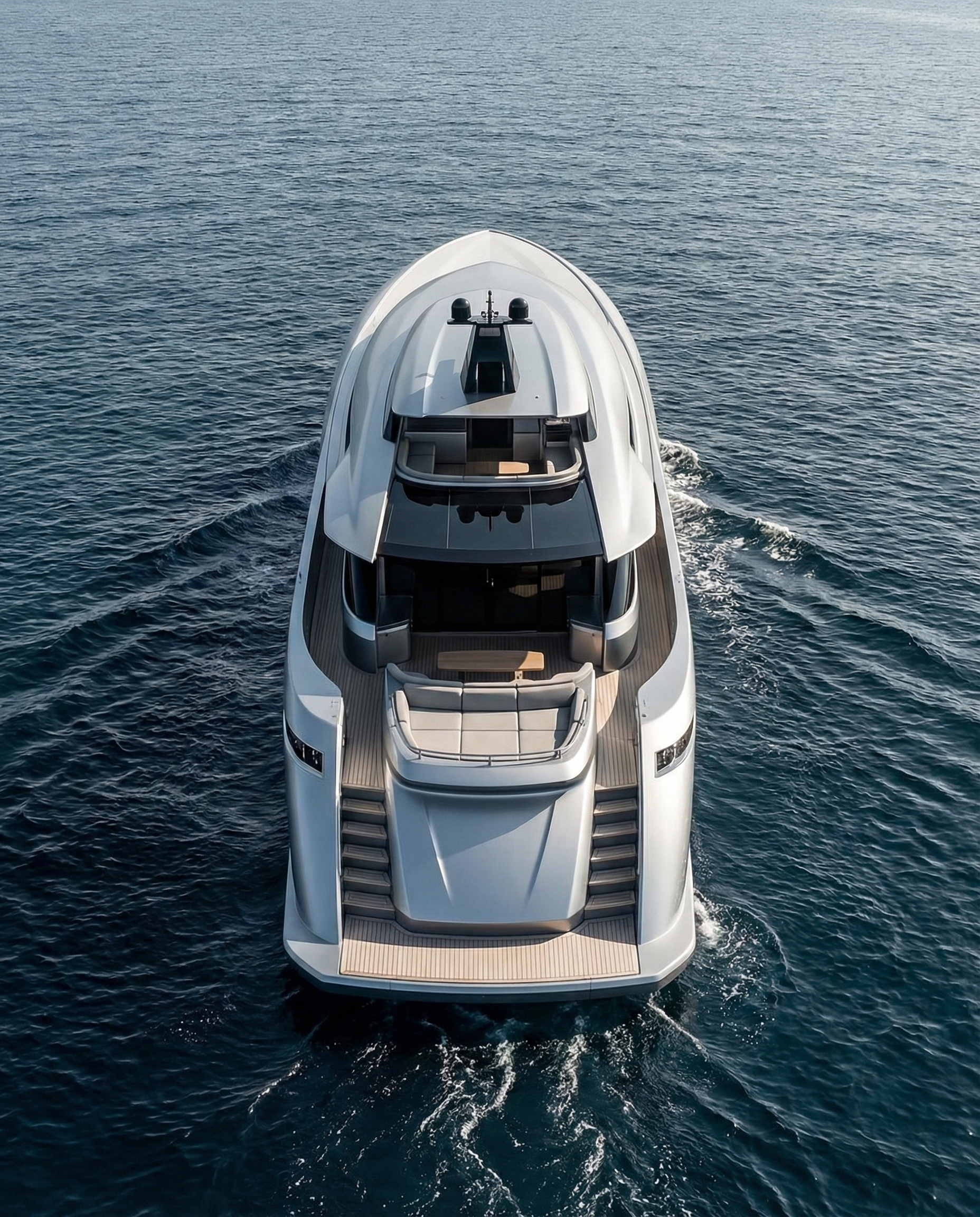
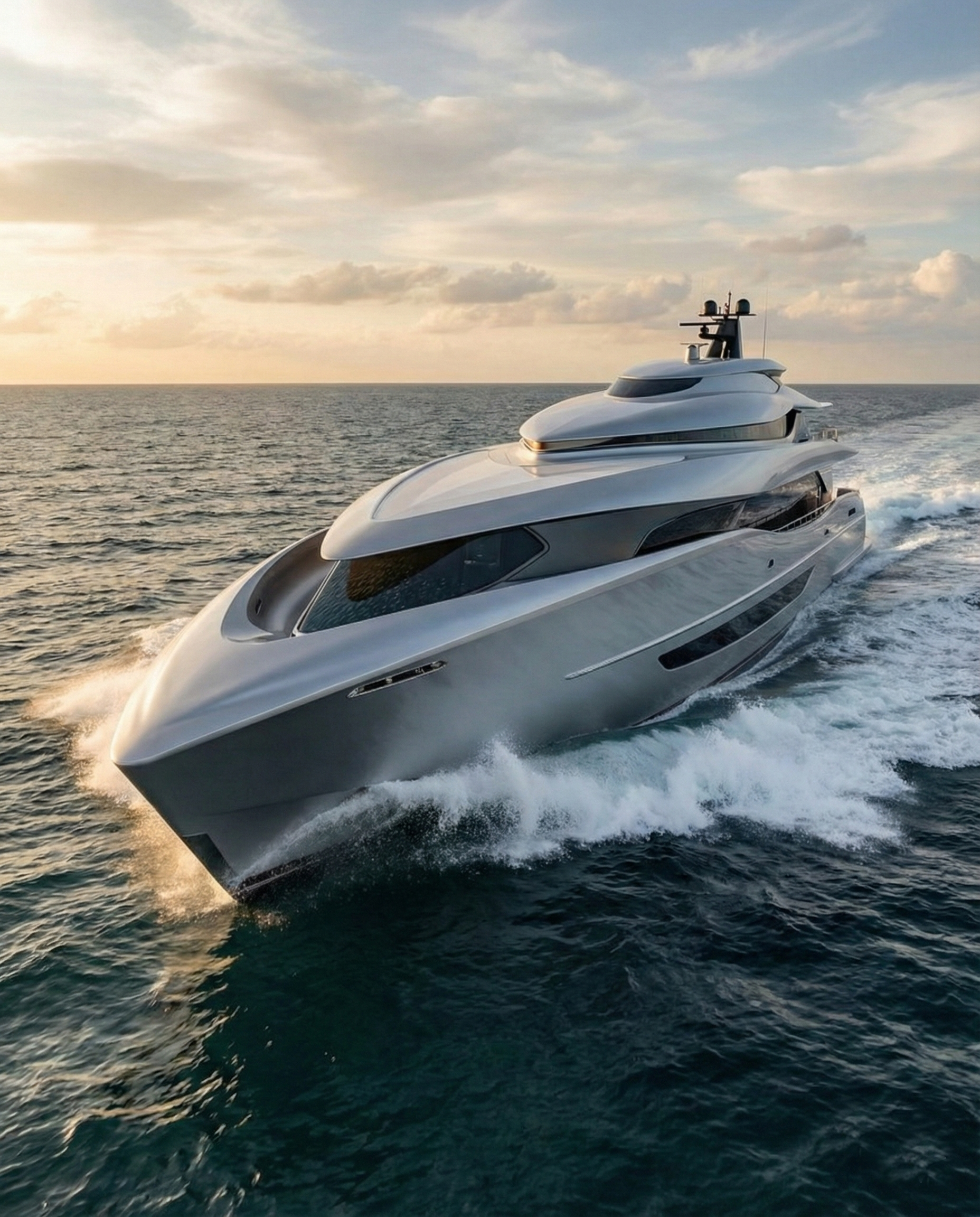
The goal was to create a space that feels closer to a private living room than a transport cabin. Similarly, in projects like Shaped by Water and Lumen Vessel, the yacht interiors dissolve boundaries between architecture and environment.
Glass, reflection, and light are used as structural elements of the experience, and the result is a space that doesn’t compete for attention. It holds it.
Materials, Light, and the Real Meaning of Luxury
One of the most important shifts in luxury transportation design is how we think about materials.
Luxury is no longer about rare materials used visibly but how materials behave over time.
Do they age well?
Do they respond to light naturally?
Do they feel honest to the touch?
Sustainability plays a central role here. As expectations shift, sustainable luxury design is becoming inseparable from high-end transportation. This means quality is now being redefined:
Materials that last longer reduce the need for replacement
Thoughtful sourcing reduces environmental impact
Simpler assemblies improve longevity and repairability
Luxury, in this context, becomes about responsibility as much as refinement.
Technology That Supports The Luxury Experience
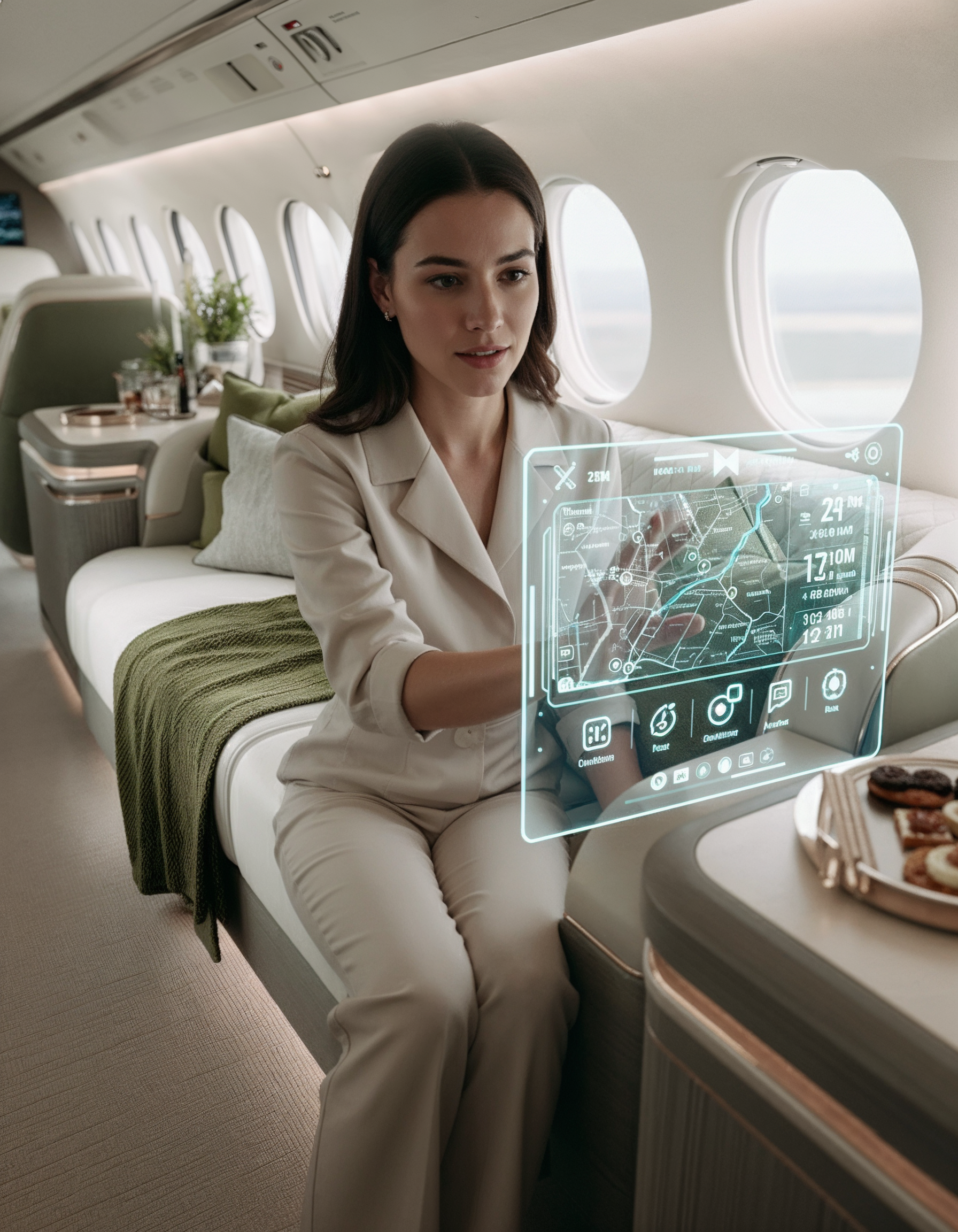
Technology is now embedded across every layer of transportation design, but its role is changing. Where in the past, it was visible, with screens, controls, and interfaces taking a central stage. Now, the most advanced systems are the ones you don’t notice.
Lighting that adjusts without being perceived
Environmental systems that maintain comfort quietly
Navigation and connectivity that feel effortless
This is especially relevant as AI and real-time design tools become part of the design process itself. They allow us to test atmospheres, materials, and spatial relationships earlier — not to replace creativity, but to support it.
The goal is to create environments that feel effortless, intuitive, and calm.
Designing What Comes Next
The future of luxury transportation design will not be defined by bigger spaces or more features.
It will be defined by:
Clarity in spatial experience
Precision in material and light
Integration between systems and environments
A deeper understanding of how people move, feel, and transition
Luxury will continue to move away from price and toward experience, and design will be the discipline that makes that shift visible.
Frequently Asked Questions
-
Luxury travel design is moving away from excess and toward clarity and intention. Designers are focusing on seamless transitions, calm environments, and spaces that adapt to how people move and feel.
-
A luxury experience is defined by continuity comfort and atmosphere. Elements such as lighting material selection, spatial flow, and acoustic control shape how a space is perceived more than visual features alone.
-
Sustainability is becoming essential in luxury transportation because long-lasting materials, efficient systems, and adaptable design reduce waste while improving long-term user experience.
-
Design shapes how users move, interact, and feel within a space. In private aviation and yacht design, it defines everything from arrival experience to interior comfort and long-term usability.
Explore More
Want to explore how sustainable design thinking and AI-supported workflows can transform your next project? Get in touch
Design Portfolio: See our ongoing AI-driven experiments, design studies, and projects.
Resources & Tools: Explore our curated AI design workflows, guides, and downloadable tools.
