
Floating Architecture and Hospitality Design Are Redefining Experience by the Water
There is something instinctive about water.
People slow down around it, and time softens. They pause, they look longer, and conversations stretch in ways they rarely do elsewhere.
Across hospitality and architecture, water has always been present as a view, backdrop, and feature. But increasingly, it is becoming something more deliberate, not just to look at, but to move through.
The Floating Experience
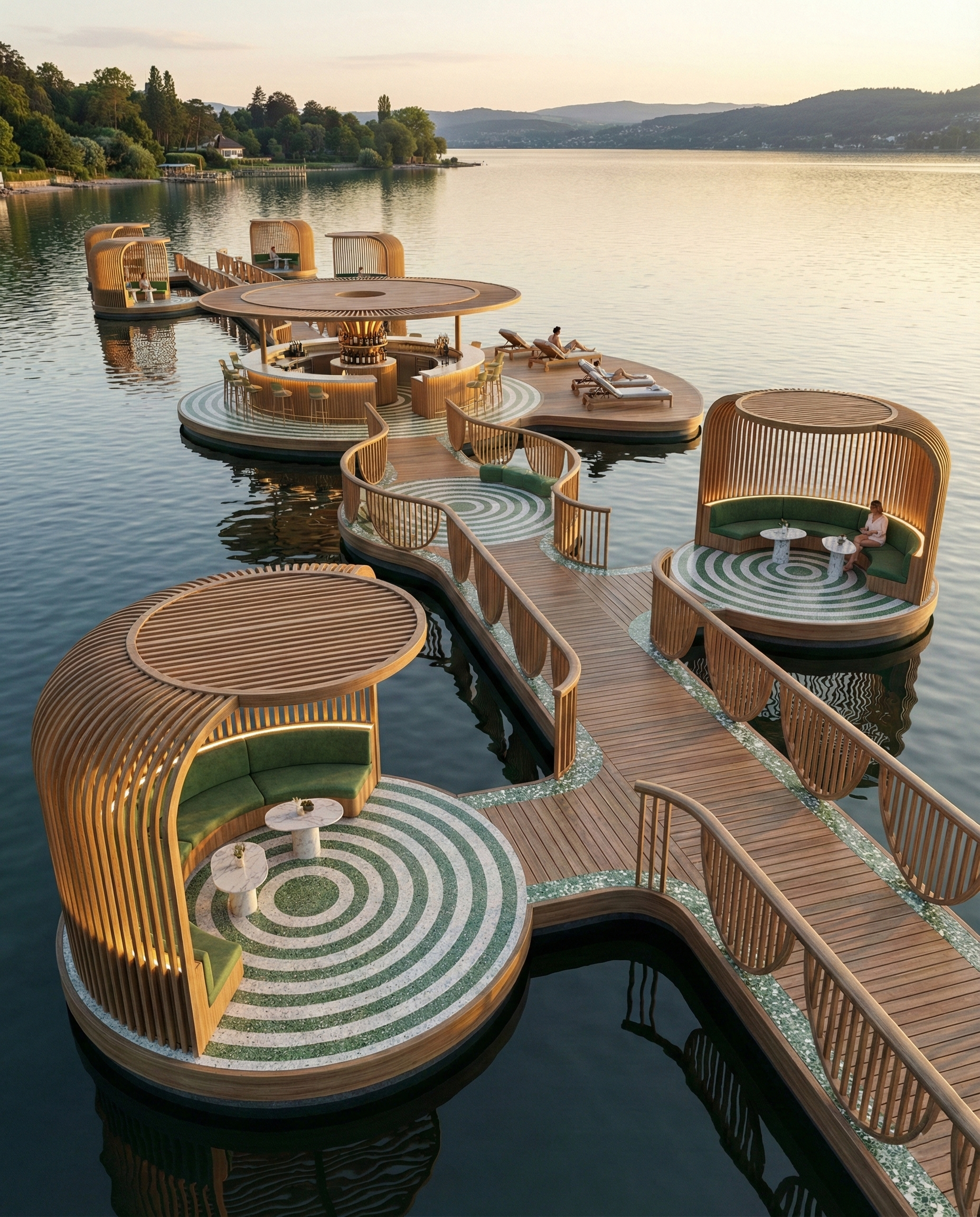
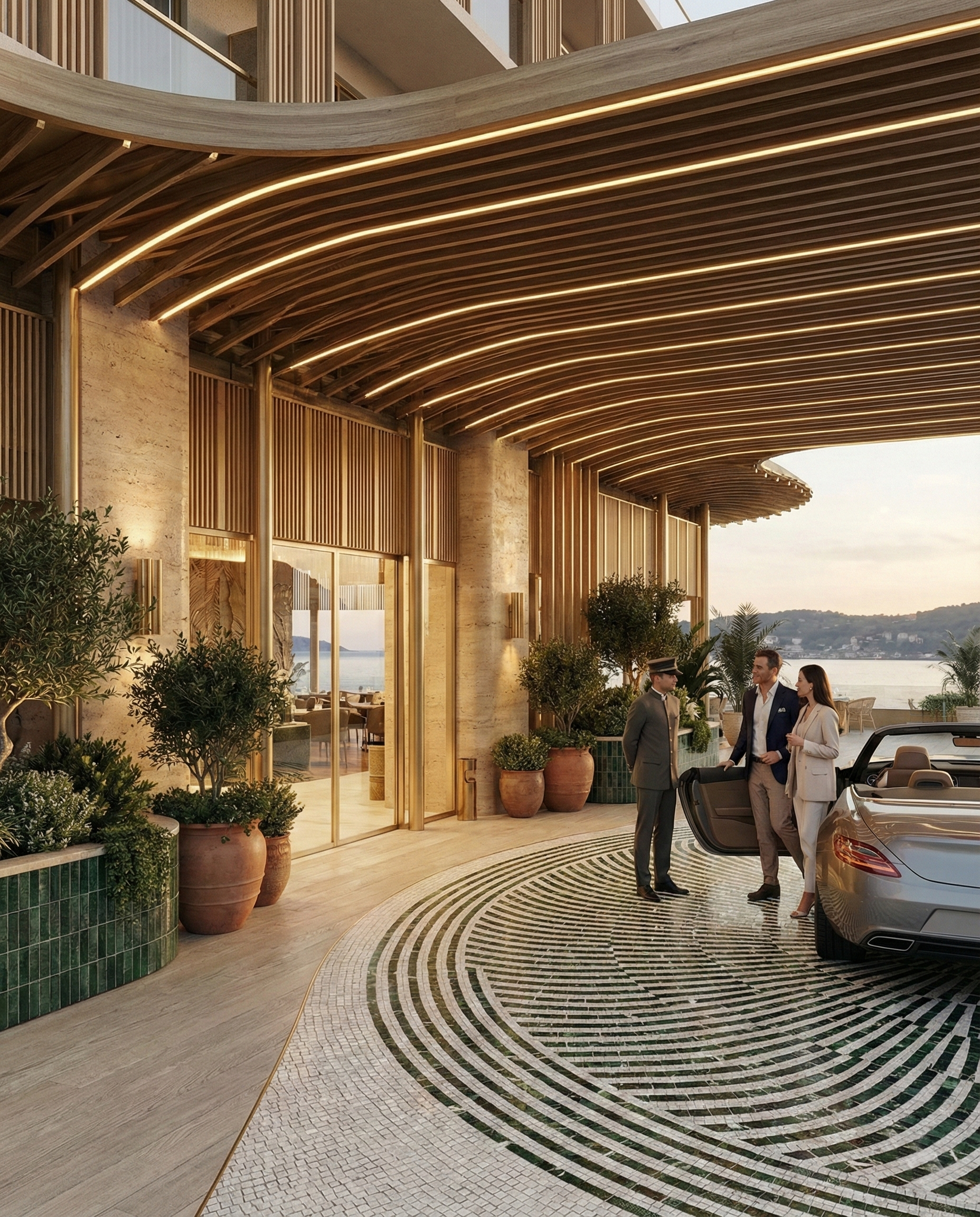
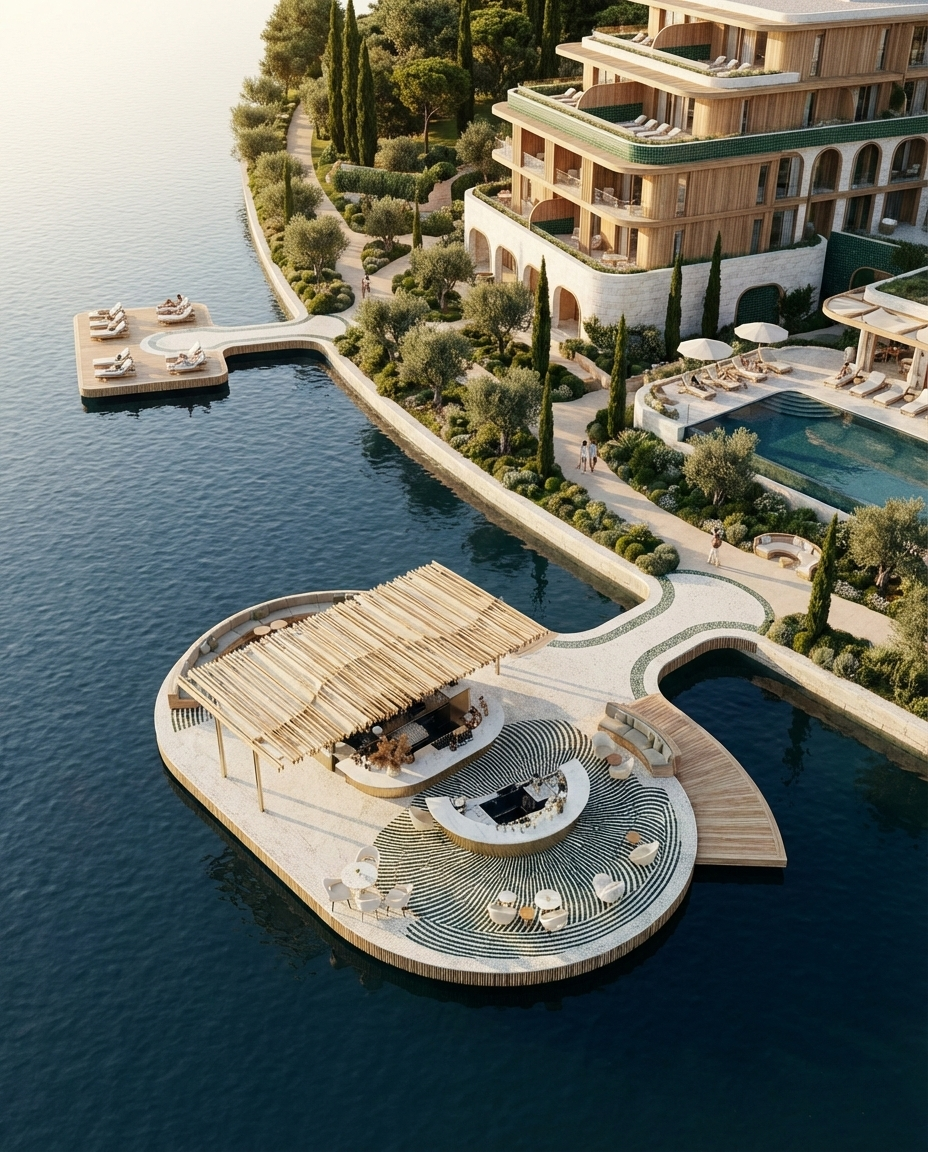
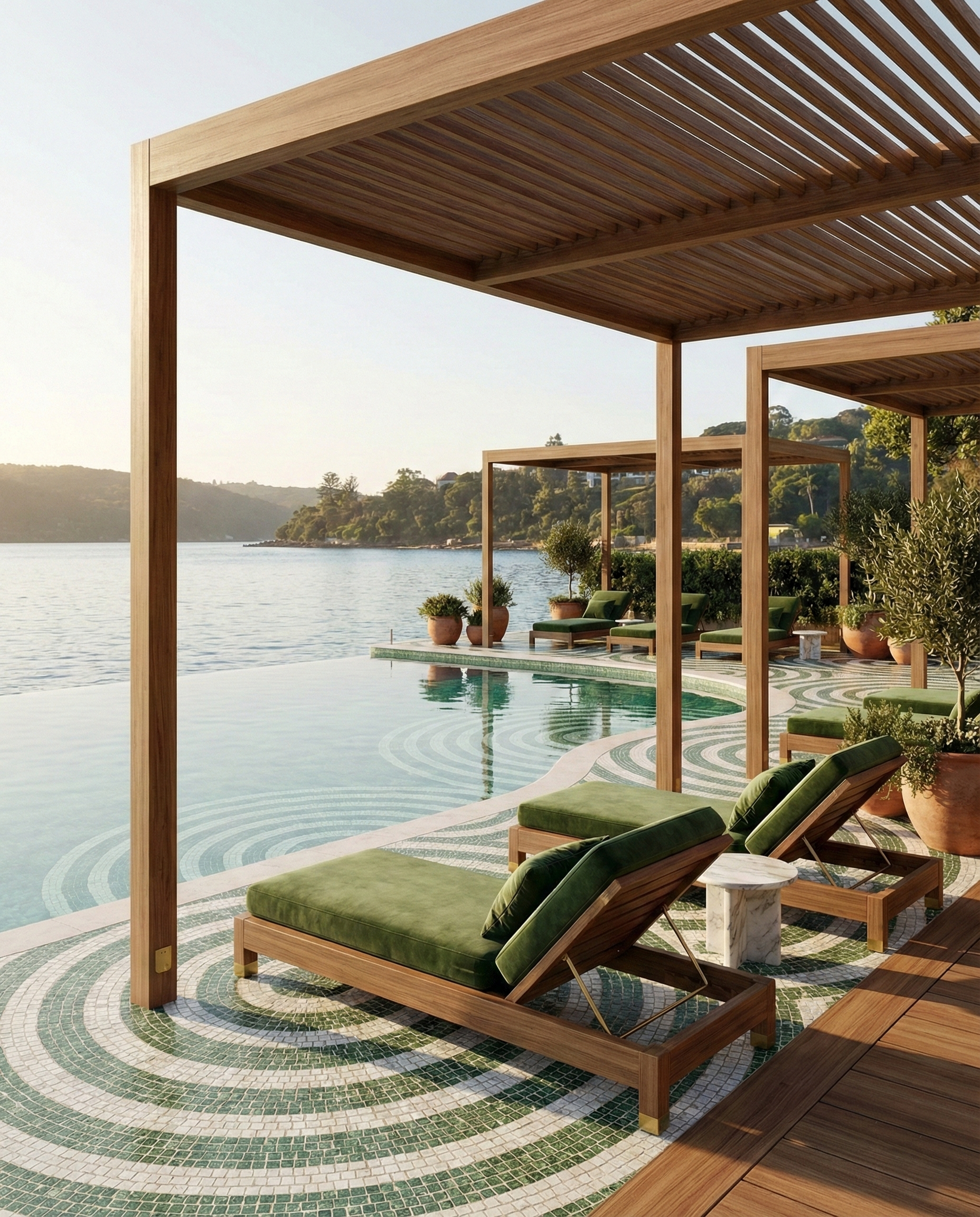
The idea behind The Floating Experience begins with a simple shift in perspective. Instead of placing architecture next to water, what happens when you let water define the architecture itself?
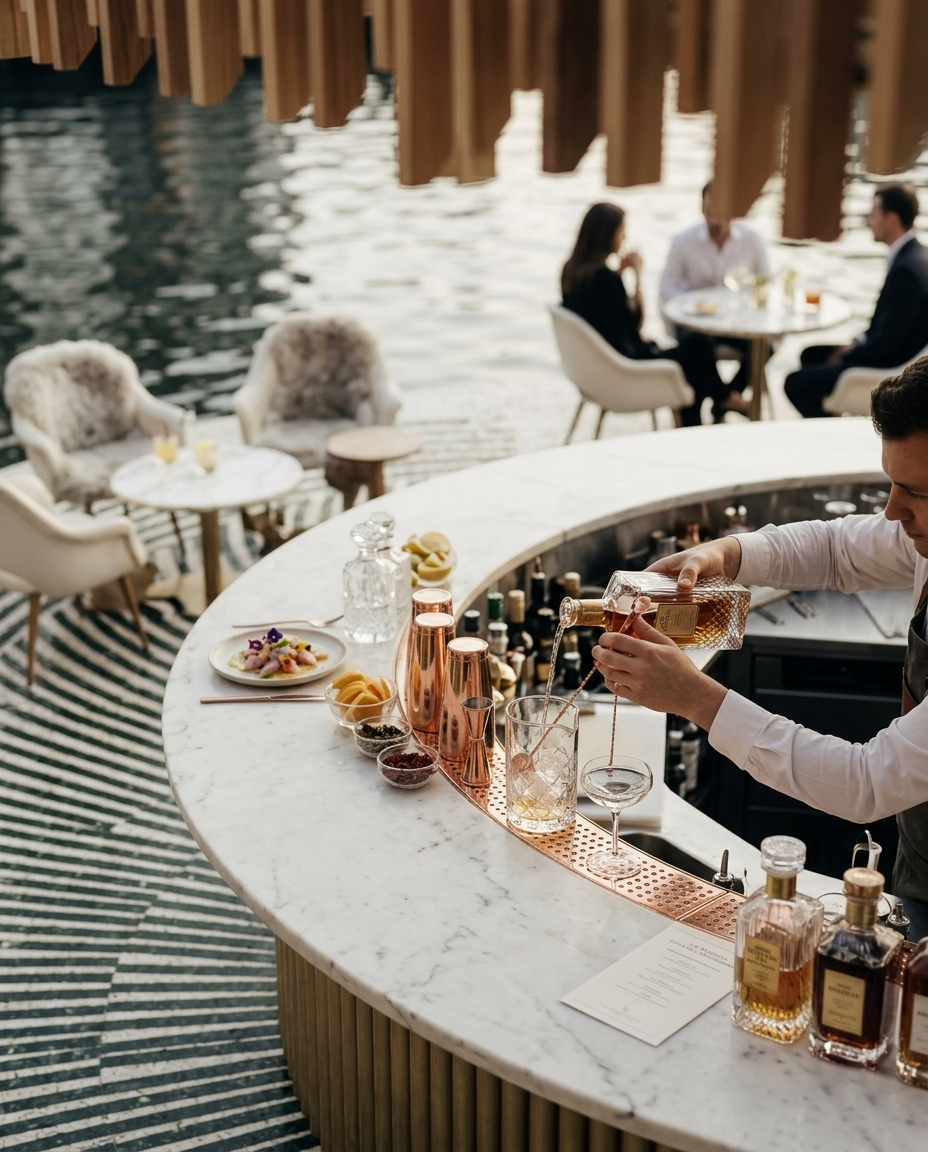
Picture a sequence of spaces drifting between land and sea: private pods, open terraces, a central bar, each connected not by corridors but by movement across a surface that is never entirely still. The experience unfolds gradually.
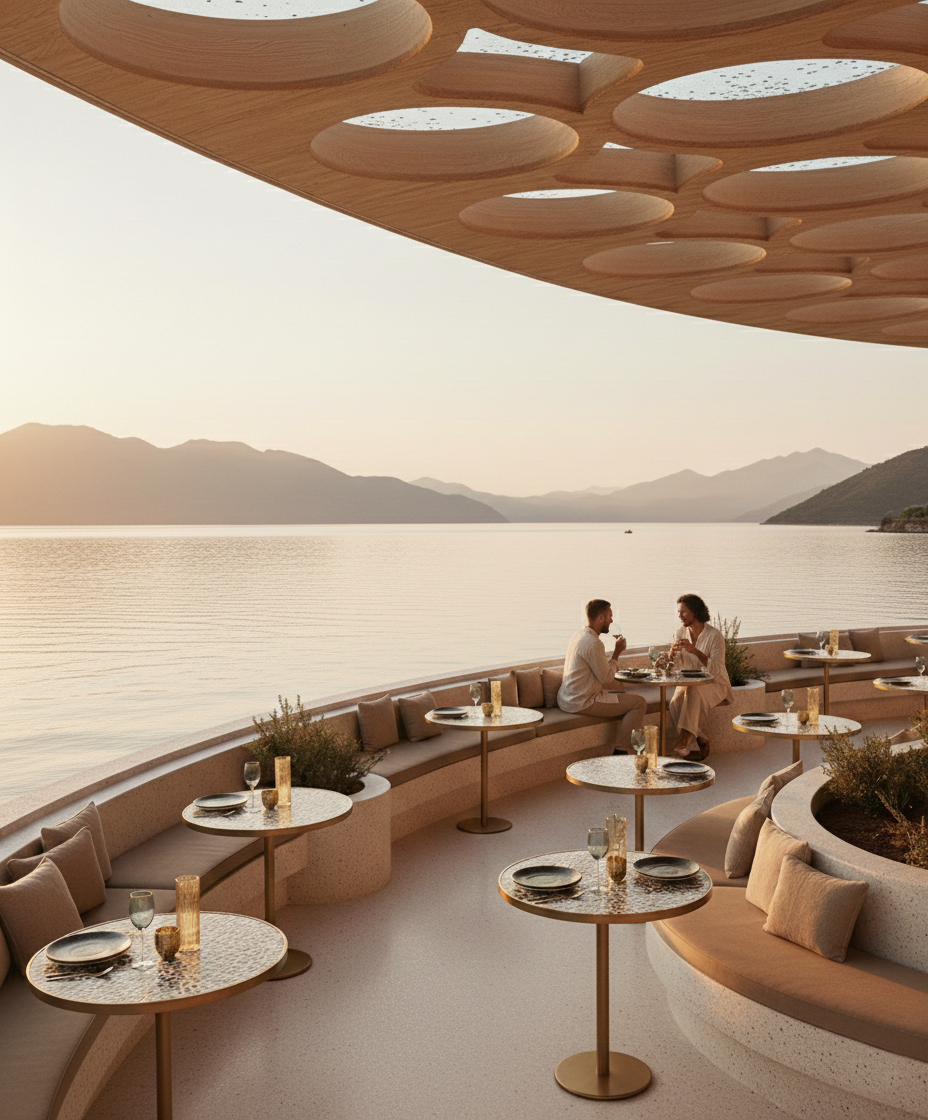
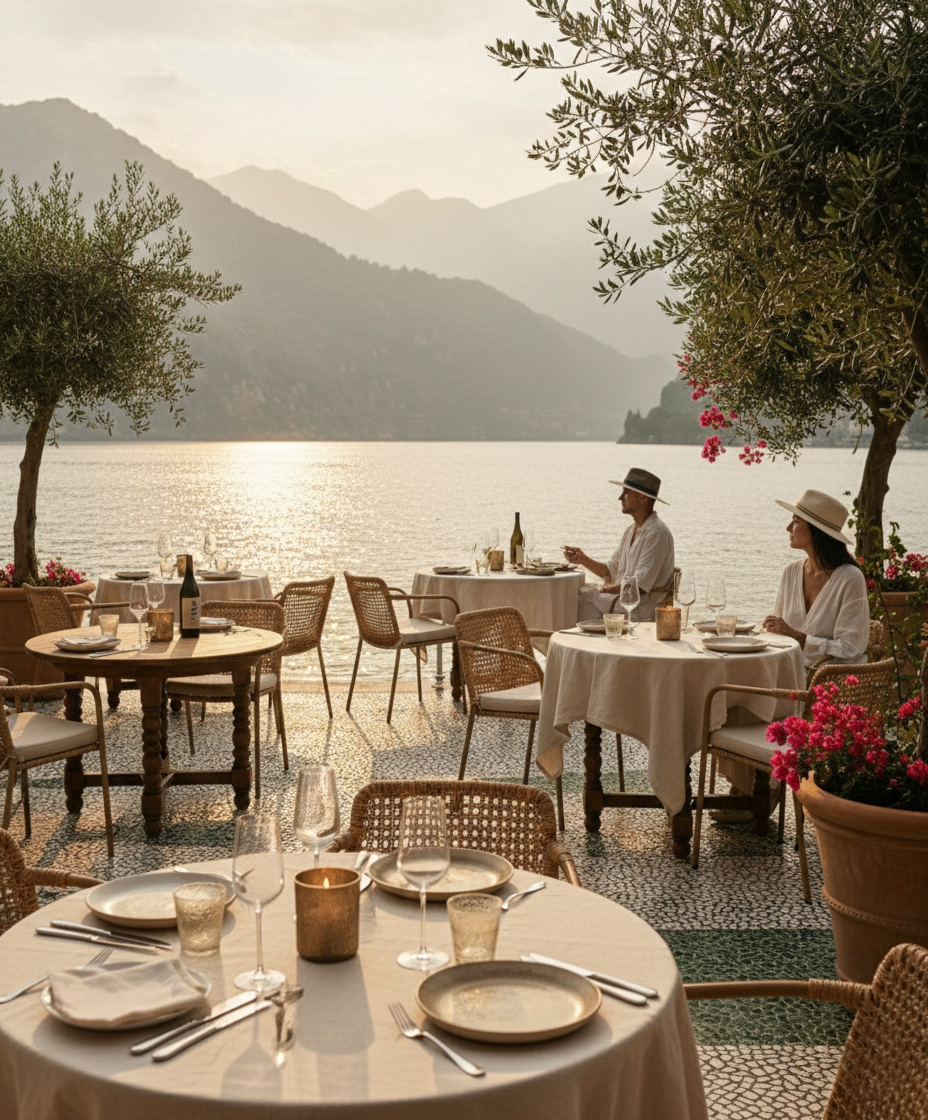
A new atmosphere, a new reflection, a new point of pause. In this context, dining is no longer just about the table. It becomes a journey shaped by light, motion, and horizon.
Why Water Changes How We Experience Space
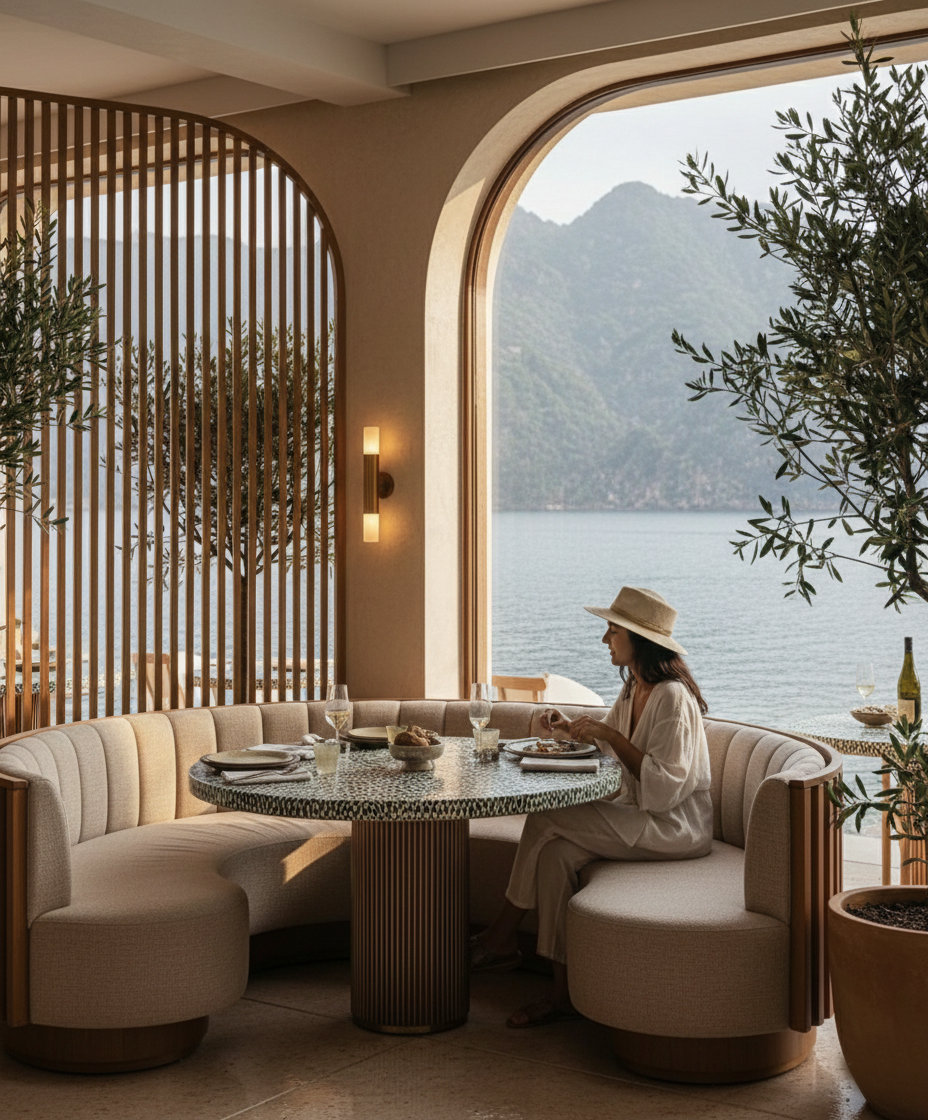
Water alters perception in ways that are genuinely difficult to replicate. It reflects light unpredictably, introduces constant movement, and removes the hard boundaries that most built environments rely on. Studies from the Environmental Protection Agency show that proximity to water, often referred to as "blue space," is linked to reduced stress levels and improved mental wellbeing, and this has direct implications for hospitality design.
Spaces near water tend to feel:
More open
Less rigid
More restorative
More memorable
But these effects are not automatic; they need to be designed for.
Designing With Water Not Around It
Traditional waterfront design often treats water as a visual asset: a view from a terrace, a pool as a feature, a façade facing the horizon.
But floating architecture and water-integrated design take a different approach. They consider:
How people move across water
How surfaces reflect light into the space
How boundaries dissolve between interior and exterior
How sound changes with proximity to water
In projects like Ring of the Sea, the architecture follows the coastline rather than imposing itself onto it. Movement becomes circular, continuous, almost tidal.
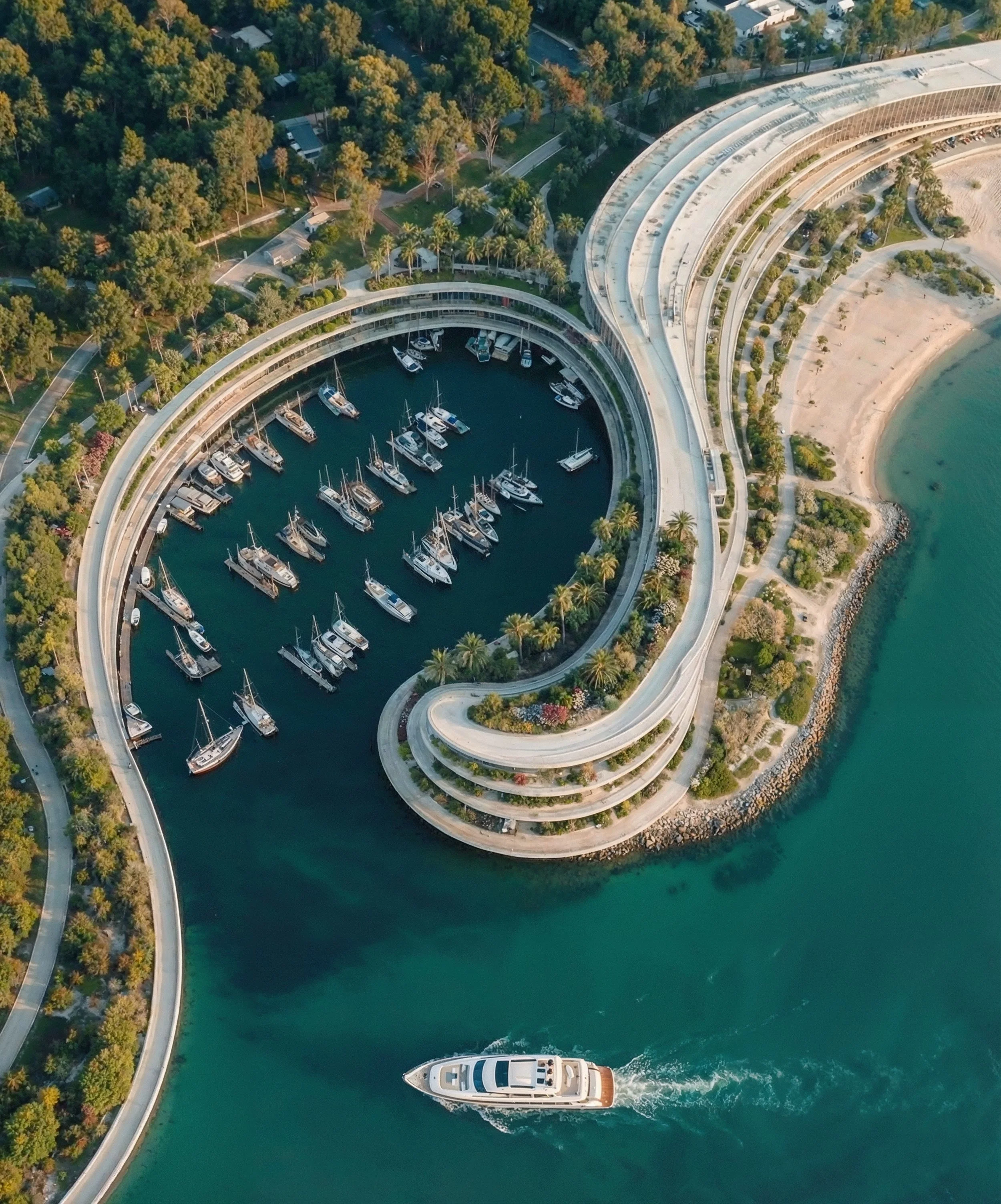
And the same logic applies to floating hospitality environments, where instead of defining a single destination, the design creates a sequence of moments.
Hospitality designed as a Journey
One of the strongest shifts in experiential hospitality design is the move away from static spaces. Guests no longer expect a single "main area." They expect progression: arrival, transition, pause, discovery. According to McKinsey & Company, experience-led travel continues to grow significantly, with travelers prioritizing environments that offer multi-sensory engagement and unique spatial narratives.
Water-based environments are uniquely suited to this because movement on water is never entirely linear. You drift, turn and stop without planning to. This creates a natural framework for hospitality experiences that unfold rather than present themselves all at once.
Light Reflection and the Architecture of Atmosphere
Water is one of the most complex natural materials to design with.
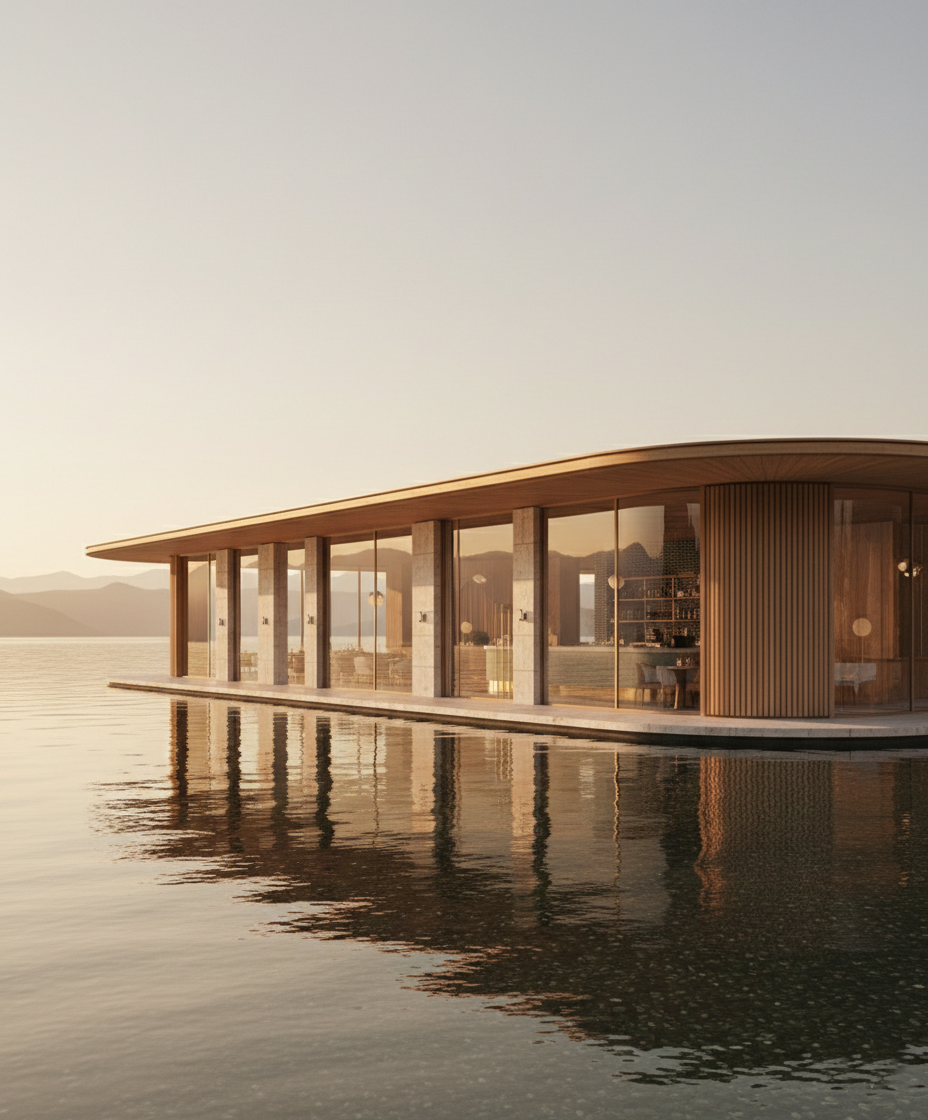
It constantly reflects and refracts light, creating dynamic conditions that shift throughout the day. Morning light feels diffused and soft, midday introduces sharp contrast and brightness, and evening becomes layered, reflective, and almost cinematic. For designers, this means the space evolves without any intervention.
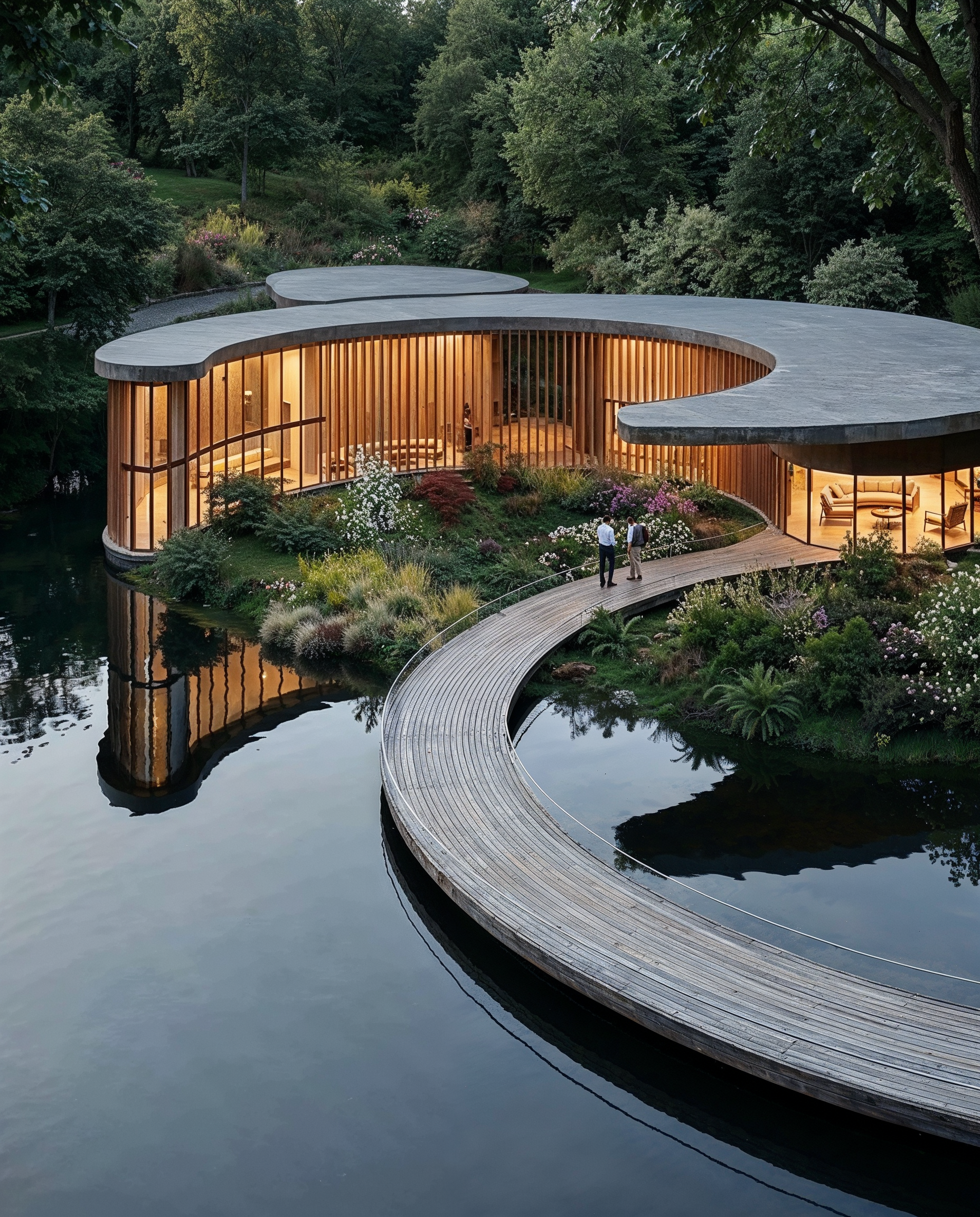
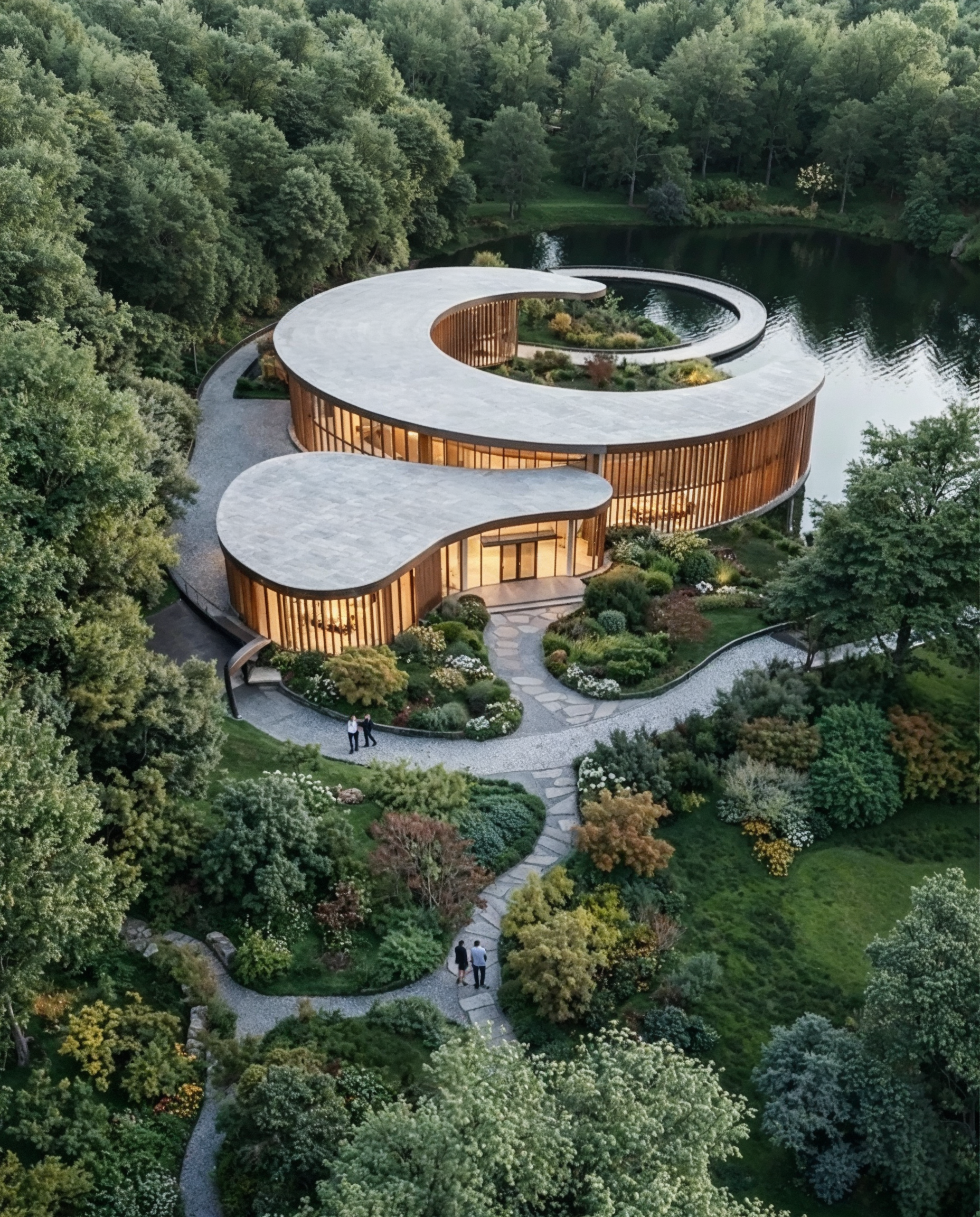
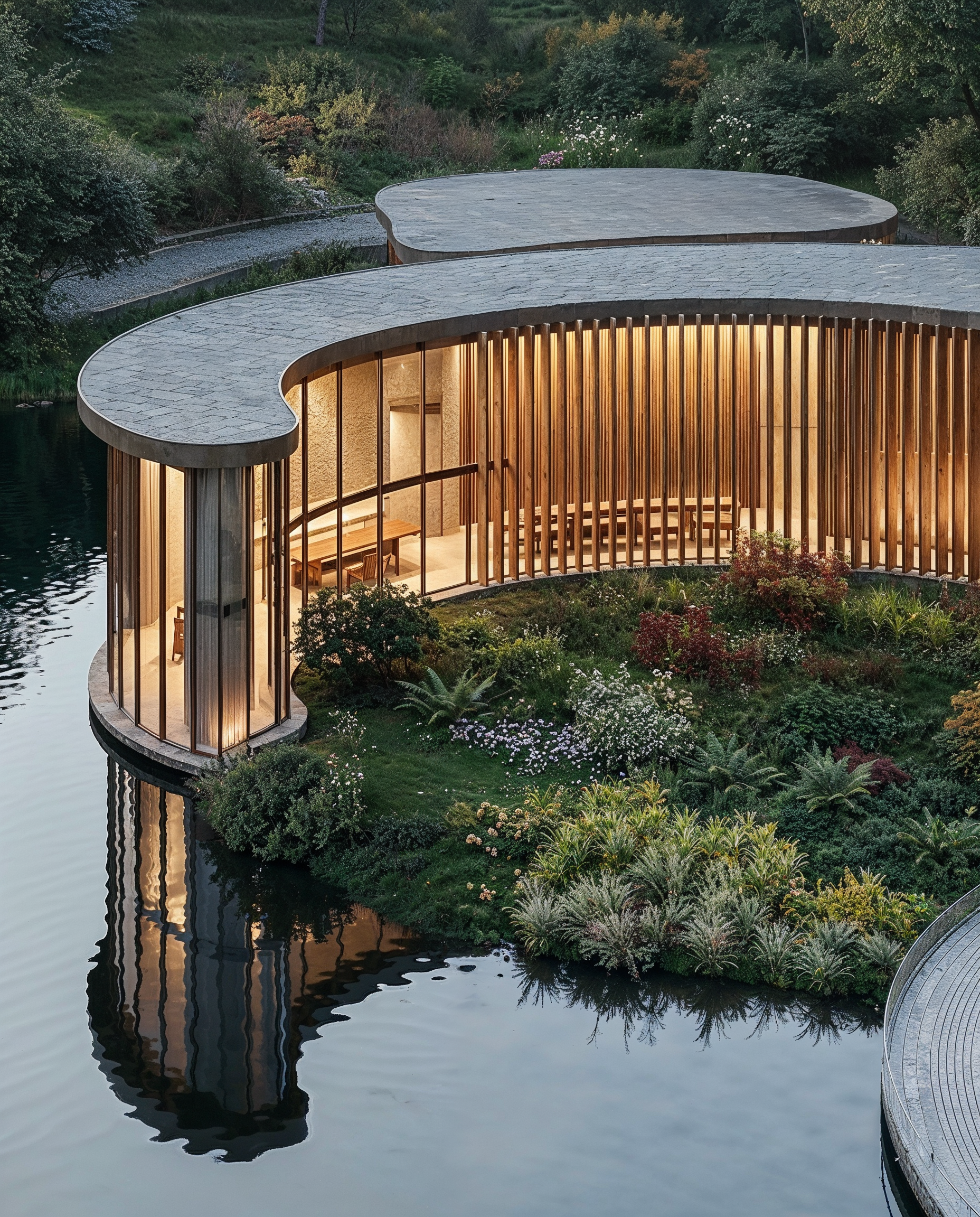
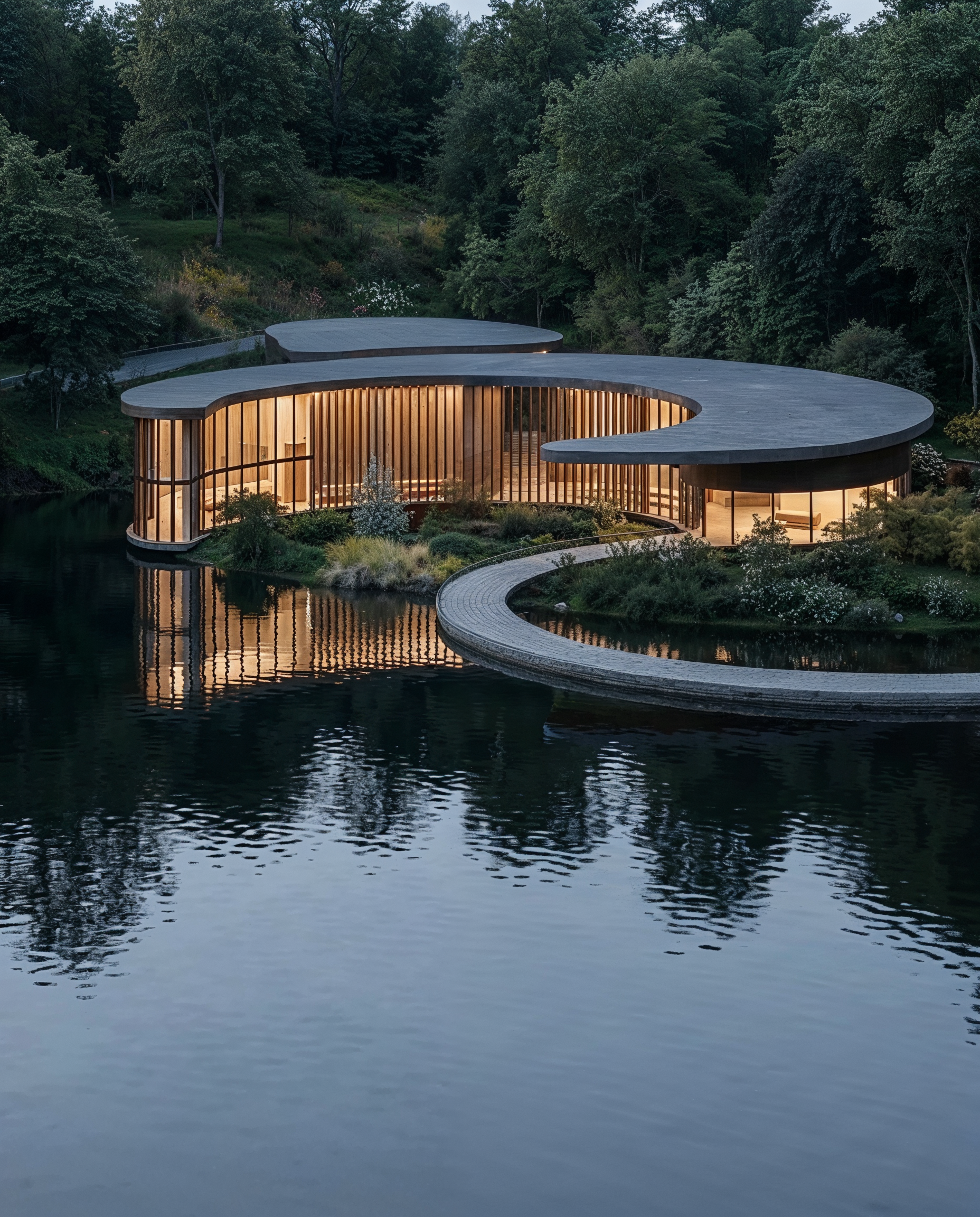
This is where restraint becomes important. Rather than competing with these natural conditions, waterfront hospitality design benefits from:
Minimal material palettes
Soft geometries
Surfaces that absorb rather than reflect excessively
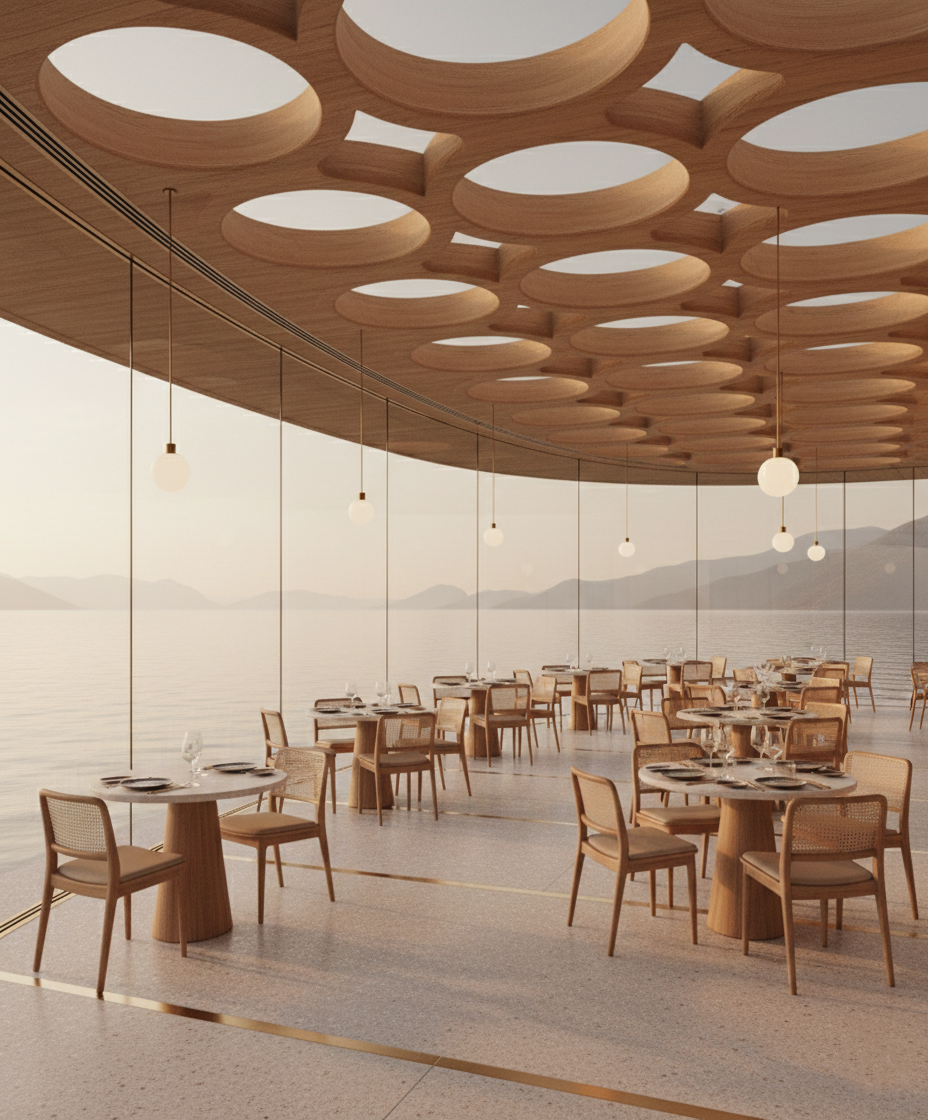
Controlled lighting that complements natural shifts
The Rise of Floating Restaurants and Water-Based Hospitality
Floating environments are no longer conceptual. From floating restaurants in Southeast Asia to modular waterfront developments in Europe, architects and developers are exploring new ways to activate water surfaces, and these projects are becoming both more viable and more desirable.
According to UN World Tourism Organization, coastal and waterfront tourism continues to account for a significant share of global travel, with demand growing for unique, location-specific hospitality experiences. Floating restaurant design and water-integrated hospitality concepts respond directly to this demand. They offer:
Exclusivity without isolation
Immersion without enclosure
Flexibility in layout and expansion
Stronger connection to natural context
At the same time, they introduce real design challenges around stability, material durability, and environmental impact, which is precisely why these spaces require a more integrated design approach from the very beginning.
Sustainability and Responsibility on Water
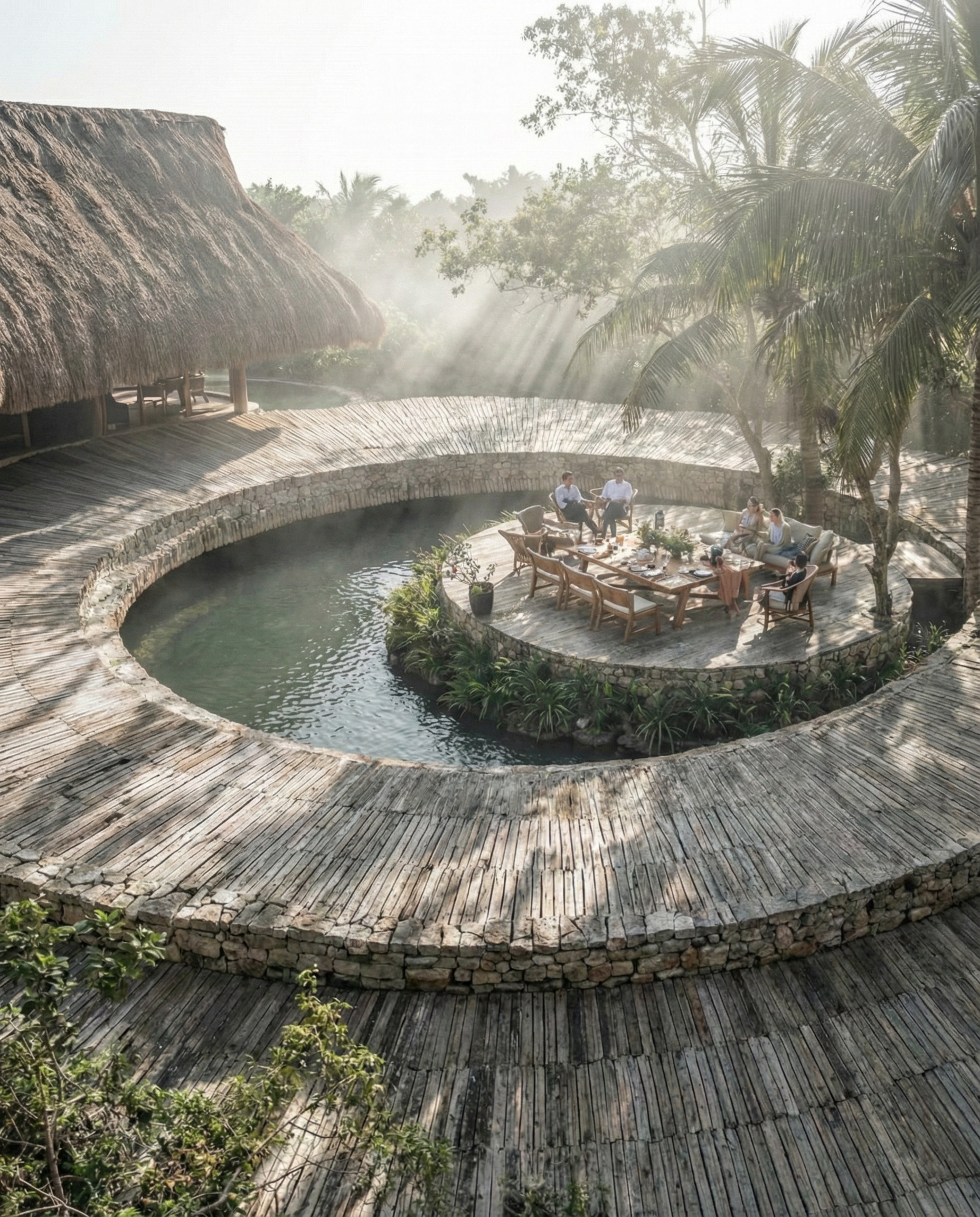
Designing on or near water introduces a different level of responsibility because every decision carries amplified consequences. To design for sustainability, materials must withstand humidity and exposure, while structures must adapt to movement and minimize disruption to ecosystems.
Organizations like the Ellen MacArthur Foundation emphasize circular design thinking, which means designing systems that reduce waste and extend lifespan. In floating and waterfront architecture, this becomes critical and is a constraint that shapes every decision, and when approached with care, it becomes part of what defines the experience itself.
A New Direction for Hospitality Design
Floating architecture and waterfront hospitality are not about novelty. They are about rediscovering something more fundamental: that environment shapes behavior, that movement shapes perception, and that space can influence how we feel without needing to explain itself.
As hospitality design continues to evolve, water will play a more active role, not just as context but as a genuine driver of experience. The most interesting projects will not be the ones that sit beside it but the ones that have learned how to design with it.
Explore More
If you are working on a hospitality concept, our studio works with developers, operators, and creative teams to bring hospitality environments to life in ways that feel considered, distinctive, and rooted in place. Get in touch
Design Portfolio: See our ongoing AI-driven experiments, design studies, and projects.
Resources & Tools: Explore our curated AI design workflows, guides, and downloadable tools.
